Uncategorized

Reykjanes Ridge Extrapolated over Iceland – Tracing Geothermal Sites

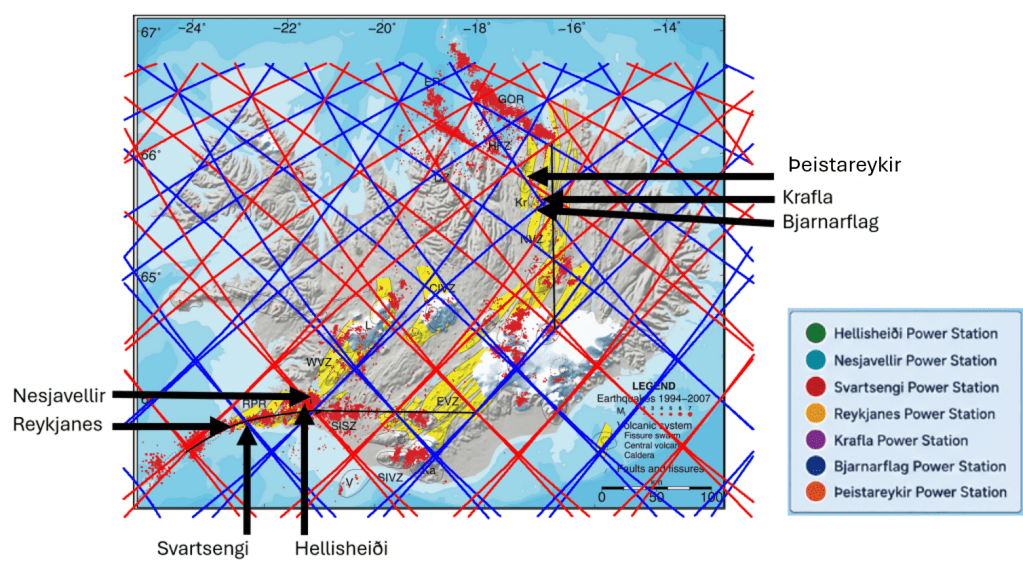
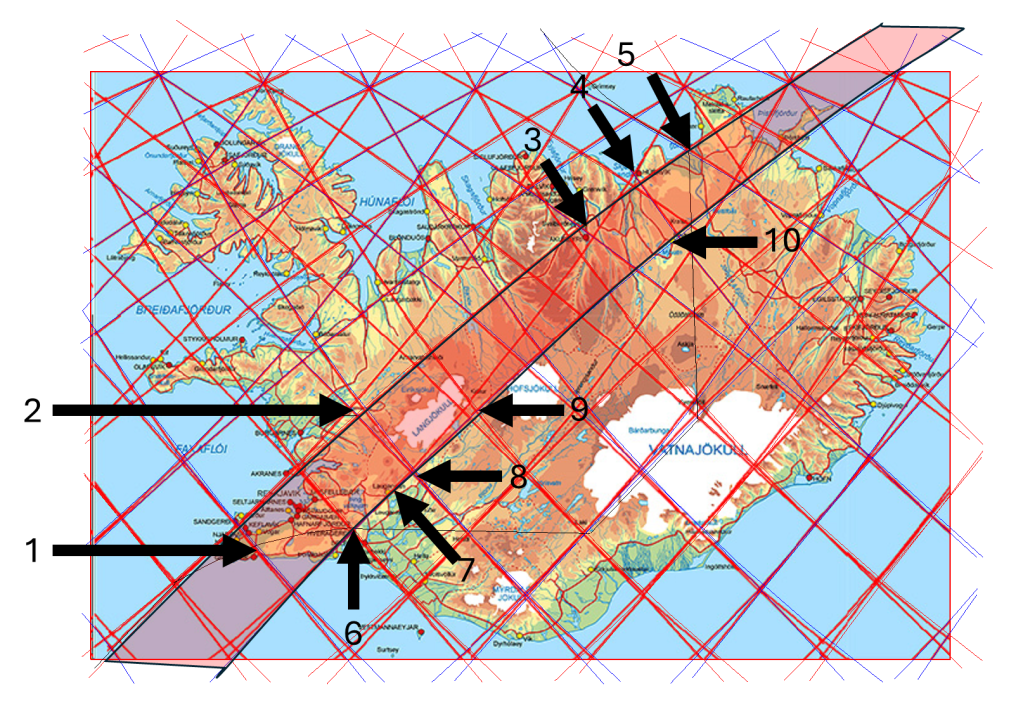
A number of Iceland’s most well-known geothermal and bathing sites appear to follow a striking spatial pattern. They can be interpreted as lying along a convection roll situated on the eastern side of the Reykjanes Ridge.

These sites form two parallel groupings:

  • Sites 1–5: located along the same line as the rift system (ridge axis continuation)
  • Sites 6–10: located slightly to the east, marking the adjacent sites of the same convection structure

This arrangement suggests a relationship between deep mantle flow, rift geometry, and surface permeability.


Sites Along the Rift-Aligned Division Line (1–5)

These sites are found along a line that can be calculated by extrapolating the main structure of the Reykjanes Ridge.


1. Blue Lagoon

https://images.openai.com/static-rsc-4/LkYIYe9rs9sILFRHNNxlTUg1L5CcB99PZ1wRFYUTOx6Sh8S3-h9NB3MdTKHPROuP9I3IDZrv_6R81n0AOxbgsZoG5PLGJYX2Xp3rg1GnBmhrMv-BN3W8DLaLi_Ito_28ZzsoZ9IJXuP9fCOSFfqSZKvt3mRRxxu1La-ribG3OoZd3nALaIzBCmr9GLNHg-qN?purpose=fullsize
https://images.openai.com/static-rsc-4/gpvApVIAjR6SwbX_QMwB3eJ5BJsOhi3_-jTYFCFG2CqfrDdpyogJKSUBV7plXpQCcUx7CrR87evYnZU0AKuAxp6OUDY6mDPZvuuitIcWq2OsFyf2IM_JcDVvXSADcGKsXCvdxJV1lFJB24NRIkbwNRFwh1w8-x_z7_xIUkNHNFZIpso5FEKzvwZ5-dKyQQ_8?purpose=fullsize

7

The Blue Lagoon is located directly within the Reykjanes rift system. It sits on the inferred convection roll, but more specifically at the intersection with a division line perpendicular to the roll.

This is significant:

  • The heat source reflects deep upwelling along the ridge-parallel structure
  • The surface expression is controlled by fractures oriented across that structure

It demonstrates how geothermal systems depend on both mantle heat supply and crustal pathways.


2. Deildartunguhver / Krauma

https://images.openai.com/static-rsc-4/p9MSSvZBKG1-xez8qlE-HcXGP_ebS4g8yBK4QVK1hQUB78GvvoMSWRnSxt1AE1yiAKebNRO-1g3RhATmR54-dE_h8vOUDcgvEdumWbM2lSuMjufwbMP8hgYHjgjeLrtw7Smbdh_vZa3vDK7dn1aFBR95_cC7QwpBtjcWmQ9ef5cqfiApvrzzXxwI8_3tQjuq?purpose=fullsize
https://images.openai.com/static-rsc-4/sEZhb0MYWcp1Fr0OPgv69SxI2A8XupAGGnftTYgSW4mjPSRRbWfFcwMT1l8bxLlrrzgwNp9-62fooHc95GEM2Pamg8zUPq4Pky2Q4i7QIH9SJtAaQ30-e_25YQdUVj9a92hTjtu4PUZllZ6iYeQCHvKOBxLFj3a3gJgAxfmPHnD36HbUOy-omBYOlg3XvuCb?purpose=fullsize
https://images.openai.com/static-rsc-4/ad1xXPXXHnGTQlic-NqQcrYLmyXlmFGPadRn97LPU9K2zaqsehCjzDoXdTKsDEbI-HqB9hgsfPZ93Hkadn7M74VgB2RZBRAK_L0W3fp6LQOfXTRQRk7uezv69k69h8cHKV4z2k8pFRdl-K3S__DbEP3FMC-LdqqR8oZmQy-smRVeB0gZSV7dD5lHjEIpNJ2Y?purpose=fullsize

This area represents one of the strongest geothermal outputs in Iceland.

  • Deildartunguhver is a major source of hot water
  • Krauma utilizes this heat for bathing

Its position suggests a direct connection to the main upwelling zone, where heat is transferred efficiently from depth.


3. Skógaböðin

https://images.openai.com/static-rsc-4/DZ8zSI7FgQ7iLBEZrsGa6O9doKc7BuqjhNfcpyg_zTClav9kTIXEt2ZI1fjGn11qp9GkPkJHVHsCutpHJE3qJU-Ohmc8ybrN1AwL14toz_Nan0gyyzyQ1YrwqxxbIwLhgE9zjdg4SF7RgUZY7HF2NsEwvqmjhJsvViaHLlDcWWc6NtJdhOtifdrWf6-rjvly?purpose=fullsize
https://images.openai.com/static-rsc-4/jeGTyOku6ONh-obI2u097tCU-XsdzCDq7lWhbTRZrQZxF7-CSbRkpbcc_UkwB_P-gBuVVKyKZix8cuukK6941qU9BAf5PWLqTJdp2JXPJ-KTY_rGFvB0Q8odHsOVxODp6rOzLsp6gvdnFo8fuV4xcLED06KzpgcYB1Zc4Yipjx6qiW2r2pTSS8ZbUvmcjlrv?purpose=fullsize
https://images.openai.com/static-rsc-4/VH8scWkAu3Toh0WjeObRIR-KUeZSkB2Q_ejaNGS-20QPJW7dSwNCJJK6nd2yGZ_JXwzDOzBhUB4ZB2WkwuwhXlifcZFmrYCF0psdfbkZ0XHie4snEZnXBJxum0zinc3ejKSban9VCO6o97MJH7auwLV_Qp8pP3rI3-fnK6TiMiwDEMOr_zR9LNt9D3pdIyLn?purpose=fullsize

Located near Akureyri, this site taps geothermal water from depth.

The water source appeared unexpectedly during the excavation of a tunnel through a nearby mountain—an observation that fits well with the idea of a linear geothermal corridor aligned with the ridge.


4. GeoSea

https://images.openai.com/static-rsc-4/0uhvzw_dC8-fdPAjln3oEEpdZkBxzKbBTbYQHVs_EkajqZnQuZMrXWOnjDfhBmnhUuHQ6sPQ_b1xalbx2aCDt9276Ee6WlpE2NginrD4BtZvoHX4HE8yIlWjiFoGeyXgD4FnT8HbA_A6fEHhXRnD6xzlBkOeYBrrzup7kDhqLKUIXxazrC2Z4rUrc36t1jFX?purpose=fullsize
https://images.openai.com/static-rsc-4/AsMA0SAG3jniu4AFc-U5DzybsE56zDAQRuXaATuTqvbnxy3vpWEZwuwmKyWdTevTtlycMGUyiu1NyUGQejw1EnjLLcNIJfH4Oh7cF0Hs8FVUpF18XWrZBUUcVycgpASPbRM3lqdd49vhtWFpdodD847YWf2ZuvrWwGgAVfQrzHw8e-fwJejEI8AE4uBm7Mqf?purpose=fullsize
https://images.openai.com/static-rsc-4/RNsHXB8W1JSPoo4TBDTYrvFU6IYq71NPVr3vC02bb6XCDwln7kdxIsFEZ3Gp8VGoSjwoQqg7LtLivFXcLXo-roDsRRA4-0yzCuXobBmk83lEw4W0OSuwOrNY2pbkqw1R5EN8YWfX6iJGiIAMIja1tVmfqzEqre3J-CxwYX835AgR_n8yI45Y2t-A4XFGDcRC?purpose=fullsize

GeoSea represents a coastal manifestation of geothermal flow.

Hot water flows from the mountain and mixes with seawater, showing how geothermal systems can extend laterally from the division line between mantle convection rolls.


5. Skógalón í Öxarfirði

https://images.openai.com/static-rsc-4/0uhvzw_dC8-fdPAjln3oEEpdZkBxzKbBTbYQHVs_EkajqZnQuZMrXWOnjDfhBmnhUuHQ6sPQ_b1xalbx2aCDt9276Ee6WlpE2NginrD4BtZvoHX4HE8yIlWjiFoGeyXgD4FnT8HbA_A6fEHhXRnD6xzlBkOeYBrrzup7kDhqLKUIXxazrC2Z4rUrc36t1jFX?purpose=fullsize
https://images.openai.com/static-rsc-4/KbpxmYkLBrySUXTmCb7mnZ76-zEpg7RmdTz8RhKi61oFXduu4j_2dLSkWb_eDIh2iERrNQfOc9IQPK3Pe7UGVDRnbLmb_i8Uex0Tjo8vkaWkpDQXYvfdFi9P4nltHUji4svU0GJEHpwPg7LSF8AC_nN0Q5PqgFru0V2A2_cnVncBsDK5QWy-_3anXEXmAh7c?purpose=fullsize
https://images.openai.com/static-rsc-4/zkBzSe1_xuvUoyrSlvBdPmzPAU2vearRanDJ_NE2kbpIpb79qOrVJlsRWjFqatCI6qQDhOQYwG1lpkQBzeo7A9uOFklG_ulQLBrGXLybGOGae_YOQjAVQnp70j-zY0WgkrMQ_B1vLvOm9MaNqZlruuBVj_EhVDfBOoMCSCea3-uZMsxTx8MFw-VwIST3Aj1v?purpose=fullsize

This remote site is less well known but important.

Its position suggests it may trace the northern continuation of the same division line.


Sites Along the Eastern Parallel Division Line (6–10)

These sites lie 1.5° east of the main division line of the Reykjanes Ridge, reflecting a parallel effect of the same convection roll, combined with the additional effect of perpendicular lines.


6. Reykjadalur (and nearby lagoon being constructed)

https://images.openai.com/static-rsc-4/uj8A58IzmpAMeDg_7UF2upAmAp2dlsuqzZG0PA9VuUjen9LJoACYIu-Tp3McpbhUtTb4HRKj-uPnBONrYKX6g54qI2gccrnmFcdACb6p5W-pSG3hVQCxXnz9GOW4eVx8qojIgDnLK76aPljkyDiDuzBl1XfMBHl2A-wBfAMWkxtMPSgOnE7sWk_Z3u68yY4M?purpose=fullsize
https://images.openai.com/static-rsc-4/3azr151SS7SEiiD_8QkH4_ltpCUB3C5baX_DLWOCsX--T73ZG8L7-lfNUn0VKyS6bE0bei4cQfB5FNDsNmxqze9IeQxMeYFdDa7Ddm3v04lxQJ_2WgSxJQ0KA08TFzOhhRo9xJ7Mpk3ZSe-sfLgWsSXxkEB2ROCQ4g5e2hpNoZGkMkjIkwK4U_rTZApW2_qL?purpose=fullsize
https://images.openai.com/static-rsc-4/vMF69q07FX-sTXGgmVe0JUk_Are0300clC6Fx5LzEZBLGJ5XFk_lJqKFgsxy-9iyQvdRjl0j-T19wchFOxYlmysJHWBUJVteJ7les6i8Djqv5Fmd51HO-NSZ7qHKZGHqGRH7xgBkYXYAxVbFS_hcT3JLK2b2FbUWNZ8gVTH1GDY7PxeGdPvYuHogORKmKOMn?purpose=fullsize

Reykjadalur is a clear example of active hydrothermal circulation.

It lies along a fracture-controlled area, likely aligned with a division line perpendicular to the main convection roll.


7. Laugarvatn Fontana

https://images.openai.com/static-rsc-4/HfEcGr7sjComjFrLh6cFKEvjoeKyE_nT5h82AZpCK0w-p_syGl8JVxnsGdbVyPJrRgRmaeQyKVwnHucJ5uiGZFK-O75Vep0muJYycXXCFvHp2D3yA732DayeY9HIrV34A63DkQyop2kS76a4mbEa1prbrCS1KTehmLpNwyYzj9U5DCVdhfYkyYg-VXNmnY4k?purpose=fullsize
https://images.openai.com/static-rsc-4/D6nM5-8mu8Y9dGP9LyXrL73S1B1V2EsFxsZ5kN1GGr-KfQF84M3Ne4oKHfS7QAVLkaz3s5AU9Vy3LgYANdmSeCVSDSoOj8TJJ2Jw01ao4AdSrlpoFW8tigeTd2wHVKRagx8AzlC1F5-1_8LI0LHxErtnsjOSKxYWRrQsO5HZzJYinVBQNePSYA1DSh-u-Fhs?purpose=fullsize
https://images.openai.com/static-rsc-4/qb-opmzATDQh4G1biqG6vpB1OXLdwOn7WqHNHJaZ6F3J33MWAiIi1QC83mJrXR7y4l24WsGhYkfpJ5Rbx9QCvBo4WxyW4G5Frs_GJnhMp5U7Bpn975leVF3ZFK99ATh4w5-VB4Xs5wK2VyRwNJs3gDEMEqSfTp7SR6pN0OxdqvXvfnb51GP_qxYON_TkV1Nr?purpose=fullsize

This site had a natural steam bath for a long time, but has now been developed further into a spa called Fontana.

It is on the parallel line, not being assisted by any perpendicular line.


8. Geysir

https://images.openai.com/static-rsc-4/6zYdVgD2rTGrp7otJLTZ1GdF57g2msy3JrXR2UYrhBFap4BueGLCLbSWxiTvXJ0BJSx4S1HeF5-HKLwmQtoqXAgXkDrarMWq2fUIYEK_LY23BksSiBtY3nNRbtFYjnvrGS4xLFTNB18Ws_ZOdDq6PAQjNUb3QGatXqqGZdjkaCYzd8PYEwy6nKcU34iShk_f?purpose=fullsize
https://images.openai.com/static-rsc-4/YTkCWJvwVRNEm3yKyMFSh0XTz-hseA8dPQGup77i69E72Q5pLrVfiBlfzuzB9IIDNHcC6DQDchZWRbqtqpeBUID2ALWfGzPTL0n3n65_idGXVjZHdwAg-l0dahAh9-x4i5e9-dp_h2Lt_ScX5MbVnBCrQH5mGIXObHqcgmpRxN9en2Cl4fdWODEqcNeRcH_L?purpose=fullsize
https://images.openai.com/static-rsc-4/M6qTis5XXVdh57EhTdBo0S41eHrO9R0PiM0QSyEP5wF_Z--jBwHEuhBhxK82LqVw9gHd-09M8SHdfWOTQ8MoJkllaghvloXWgNu2aiIiwTjAiOTJHwPiPD9uVKg5FCCA_9GlM5StDGYFSfXqXU0OCZ9ndg_KudIbxKFuo-irrOz9DNkt5J_IyGG70xNEh9PT?purpose=fullsize

Although not developed as a bathing site, Geysir could function as one.

It is particularly important because:

  • It sits within a well-defined geothermal area.
  • It is associated with a perpendicular line, slightly east of the main Reykjanes Ridge convvection roll.

This reinforces the idea that geothermal sites often occurs at structural intersections.


9. Hveravellir

https://images.openai.com/static-rsc-4/z_rNNQ2wjihWd0fbl0wQpx8XE98EMEhzv9QGoj2ZcaZNHTrbFfFyKAsqy9_MHhhzQ1HHQGPWLFf_DKjUQaEbXYZknKB6cVpazs_lfr1Ic82TWYeEOblGilKy83nbqyOcsgpKnwrheRontGE999hQVRbqKLBBVcKZmf9P_uGO4DaHz2mucALwclj4buv1Q21r?purpose=fullsize
https://images.openai.com/static-rsc-4/jrI5e7suH4SqNqXXMt4phwWmxv_zcLD_eNomf6O1IPpbM_0X8Q4YdZ6KRhgnQ6QYF3YfIhStQ7zOxBEDn1WH61Gh8fRxwgWNkeZGj-6Gvfnc9LVo4R40VjdTg8NymCDcreqRGbTTeLcNsPHR2gqlBpDL1qc_mBT2gXoHt_isnWH0mFuDyR8u6TtV_oeBcTTe?purpose=fullsize
https://images.openai.com/static-rsc-4/xnlII_ymBfvvTnxaQ1BU3KhjG6askkgm7Z9yKSD5_mSnuLhr1LDwr6dTZhumCARJmLM1ibyF_pcevdEPyn-kzRmRjgHvOVNcWWRRCFMywkFCpnXbjsIm7WtGi0PG5ZHYwdkXLMeUed2i3uIUzq3S240gv6HXzT0I9ZfS1JF0A-oLy8mdCKyaruNGUengkq08?purpose=fullsize

Hveravellir lies in the central highlands and is key to the overall pattern.

It effectively links southern and northern geothermal sites, supporting the idea of a continuous structure.


10. Mývatn Nature Baths

https://images.openai.com/static-rsc-4/ToBVOTMUHOkUpIAZzbsXDTFunWGGjsuiqBDbucxjB7A9L9F-CMjUBQv-lFpqNnT2btWQLSrEsialBqHth7ps_qlAFbNYwoqHt2xWhZJEZU2rpMNTSkGgHmy9cchrsAyoUXG4oiPvauSzSqiu7RRXm4CRRuCc6ml-JxWcZUbrdH6tOSXXWIYWKuBfy-u0qNRH?purpose=fullsize
https://images.openai.com/static-rsc-4/MRiGrOSHDdx0Do808Wl723lgX_mjw0kFeuwnlaBPrYaEzwBxDCV8zLMjz4GWDxwm4Wg0-x7tZszH7_6x7YLML_IpjVT3jEAW10fWgwE_-oNc9KPj9YaYBrRJUJuHVZ1al_IsWH44Z7e6FrU-74r9bzWMYQBtgwjQVD3W_SxO4lo9xAqSB32KDqcUNvLuVId-?purpose=fullsize
https://images.openai.com/static-rsc-4/cxGahskWZxAQ8vMmsgKwBtBPEM4y7ysdduczA7_roybnBYiyGPYKPeEK6ua-Fpfu7G2XDgKDn6211q45CJtdDUa6k8fKABImjGnvLZsVi2l0MbYSbJK4yZkDZZ0aFNFIRbzI2gbg_gZKhIa-AelgTJG5ckTx_N4H6UotxNfv2ATApLN9QnEqEpQoJj1_XWZ7?purpose=fullsize

This site lies within one of Iceland’s most active volcanic systems, that of Krafla.

It represents a major hub of geothermal activity.


Overall Interpretation

This arrangement suggests:

  • A primary convection rolls division line aligned with the Reykjanes rift
  • A secondary row of geothermal sites 1.5° to the east
  • Frequent control by perpendicular divisions of other layers

The most important takeaway is:

Geothermal sites are not simply located above heat sources—they occur where heat, and permeability intersect, often at intersecting structures.

All the sites, except Laugarvatn, illustrate this especially well, as they appear linked not only to the onvection structure but also to cross-cutting, perpenidculary aligned, division lines.

Uncategorized

The Large Eruptions of Eldgjá 939 and Laki 1783

The two major fissure eruptions of Eldgjá (939 CE) and Laki (1783 CE) display several striking similarities. The eruptive fissures are broadly parallel and occur within the same general region of southern Iceland. Lava from the Laki eruption partly overlies lava produced during the earlier Eldgjá event..

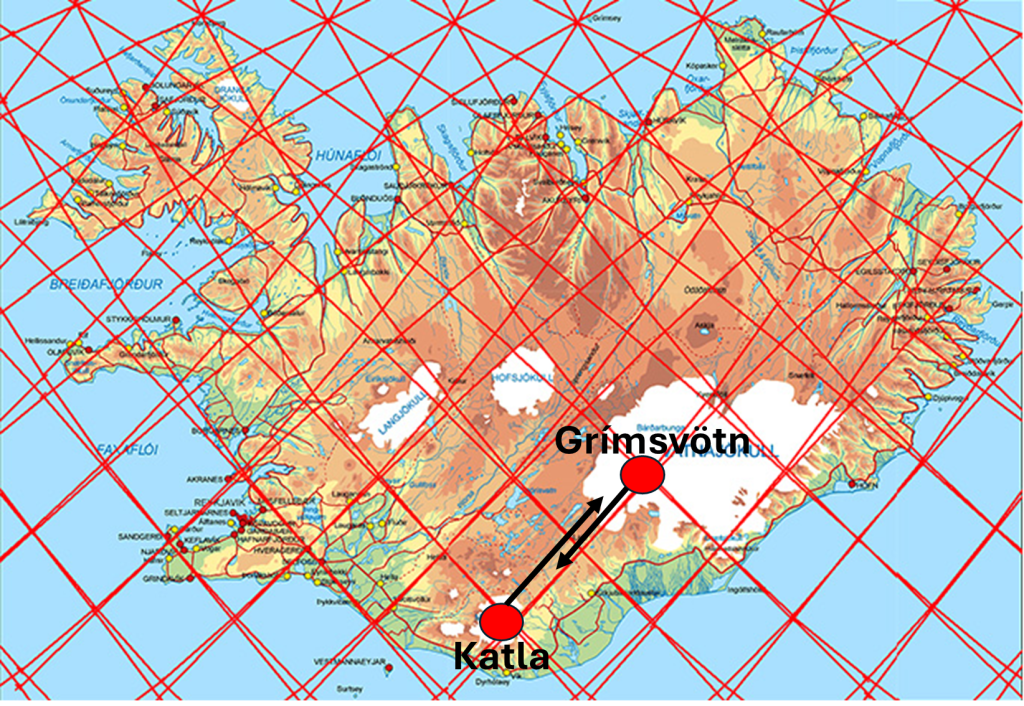
Despite these similarities, the eruptions are associated with different volcanic systems. The Eldgjá eruption is linked to the Katla volcanic system, whereas the Laki eruption belongs to the Grímsvötn system. These central volcanoes are separated by approximately 120 km. Remarkably, the Laki crater row lies almost exactly midway between the two calderas.

Both calderas also coincide with intersections of the structural division lines shown on the map. The dykes responsible for the eruptions propagated along the structural line situated between the two calderas, forming fissures that follow the same general orientation. This geometry shows that the regional stress field and crustal structure guide magma transport over large distances.

In both cases, the propagating dyke appears to cross a perpendicular structural division located between the two volcanic systems. The onset of eruption occurs shortly after this crossing. This recurring pattern suggests that the intersection between these structural elements plays an important role in controlling where magma reaches the surface.

One interpretation is that the perpendicular division represents a zone of enhanced crustal permeability, where fractures or weaknesses allow magma within the dyke to ascend more easily. Another possibility is that this structural boundary marks a deeper source region where additional hot magma is supplied from below. In this case, the propagating dyke may intersect a region of increased magma pressure or temperature, destabilizing the system and triggering eruption.

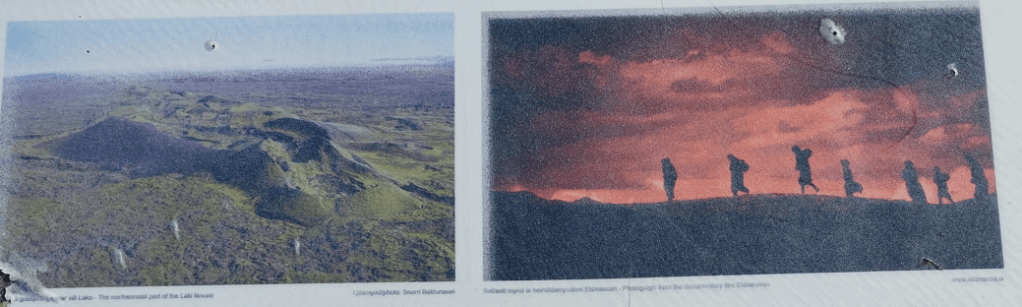
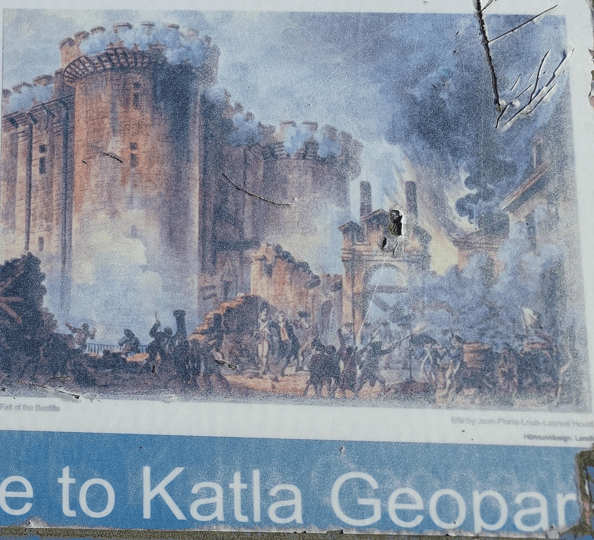
Along the Ring Road, informational displays describe the severe consequences of the 1783 Laki eruption. Images depict the suffering experienced by the Icelandic population during the event. Another image refers to the French Revolution, illustrating the wider climatic and societal effects of the eruption.

Images representing Laki eruption.
Image related to the French revolution.

The volcanic haze produced by Laki spread across large parts of Europe, contributing to crop failures and famine. These environmental stresses intensified social tensions in France and are considered one of the contributing factors to the unrest that culminated in the French Revolution.

These two eruptions are did affect the history of Iceland more than any other volcanic events.

Uncategorized

Snaefellsnes Peninsula – Iceland

The Snæfellsnes Peninsula is a particularly remarkable region of Iceland because it hosts three distinct volcanic systems aligned roughly east–west across the peninsula. Two of these systems have very similar names. The easternmost system is Ljósufjöll, and the central one is Lýsufjöll. Both names carry essentially the same meaning: “the light-coloured mountains.”

This name refers to the relatively silica-rich rock types found in these systems. Compared to many other volcanic areas in Iceland that are dominated by darker basaltic compositions, these systems contain a higher proportion of evolved, more silicate-rich rocks. The lighter coloration of the rhyolitic and dacitic components gives the mountain ranges their distinctive appearance and explains the origin of the names.

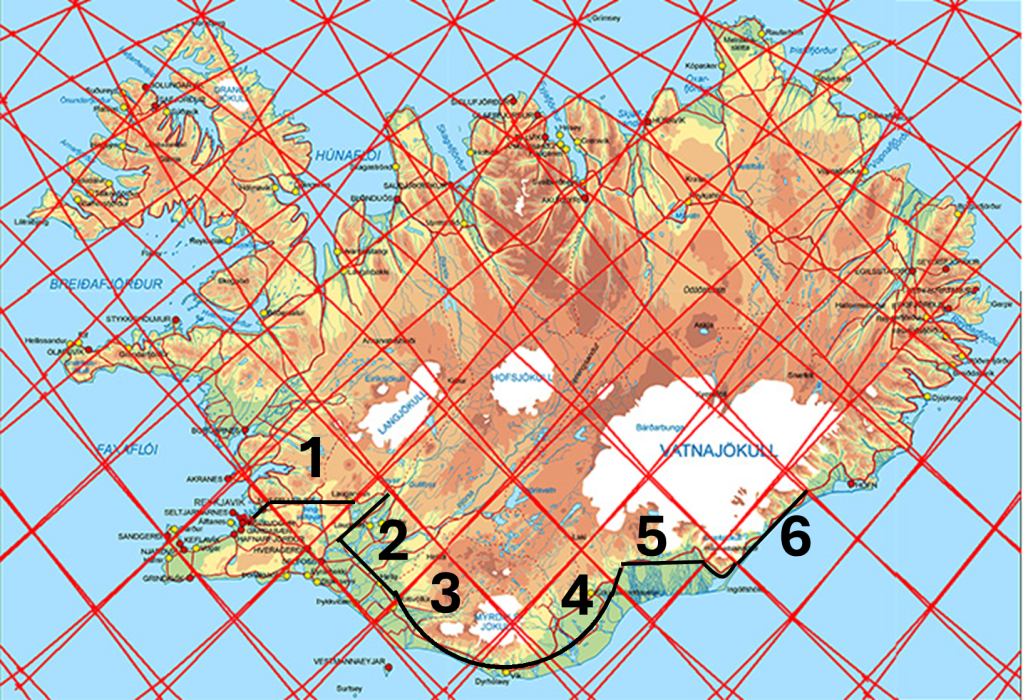
An additional noteworthy feature lies beneath the town of Stykkishólmur. The town receives geothermal hot water from a fracture zone whose orientation corresponds closely with predicted structural alignments derived from the convection rolls model of mantle flow. According to this interpretation, a deep-seated division line, representing a boundary between adjacent long convection rolls in the mantle, generated stress conditions favorable for fracture formation in the overlying crust. The present-day geothermal circulation would then be a surface expression of this deeper structural control.

At the same time, the surface morphology of the peninsula has been strongly modified by repeated glaciations. Glacial erosion has carved valleys and lineaments that follow a different dominant alignment. Interestingly, this second alignment also corresponds to another predicted set of division lines within the convection rolls model. In other words, both the geothermal fracture system and the glacially sculpted surface features appear to reflect deep structural patterns rooted in mantle convection dynamics.

Taken together, the volcanic distribution, geothermal fracture orientation, and glacial lineaments on the Snæfellsnes Peninsula may therefore represent multiple surface expressions of a deeper, organized mantle flow structure.

The town of Stykkishólmur:

Here it is on the map:

The town is heated with water from this fracture:

The surface is shaped according to another set of lines, also to be calculated:

On the westernmost tip of the Snæfellsnes Peninsula, Snæfellsjökull rises prominently above the surrounding landscape. This glacier-capped stratovolcano dominates the region both visually and geologically, forming a dramatic landmark at the edge of the Atlantic Ocean. Its symmetrical form and ice-covered summit make it one of Iceland’s most recognizable volcanoes.

Near its slopes once stood the home of Guðríður Þorbjarnardóttir, one of the most remarkable women of the Viking Age. Around the year 1000, she traveled with her husband to Vinland, where she lived for three years. During that time, she gave birth to her son, Snorri Þorfinnsson, who is considered the first European child born in the New World. Vinland is the old Icelandic name of the part of North America found south of Helluland (Baffinland) and Markland (Labrador), centuries before Columbus sailed over the Atlantic Ocean.

On the other side of the glacier, this painting shows Columbus in Iceland:

Behind them rises Snæfellsjökull, the glacier-capped volcano that inspired Journey to the Center of the Earth by Jules Verne. In Verne’s novel, the entrance to Earth’s interior is hidden within the crater of Snæfellsjökull, transforming this already dramatic volcano into a literary gateway to the planet’s deepest mysteries.

Uncategorized

The Mississippi River, Oceanic Ridges, and the Geometry of Mantle Convection Rolls

Mathematics of Mississippi River

One of the recurring observations in the mantle convection rolls model is that major surface features, both continental and oceanic, are not randomly distributed. Instead, they appear to follow large-scale geometric divisions of mantle convection rolls.

A compelling continental example is the Mississippi River system, as shown below:

The thick lines, one of which closely follows Mississippi, represent the large-scale lower mantle convection rolls as shown here:

The Mississippi River representing a Mantle Division Line

The Mississippi River follows a remarkably linear north–south corridor that coincides with deep tectonic segmentation of the North American lithosphere. Along this corridor lies the New Madrid Seismic Zone, one of the most significant intraplate seismic regions in North America.

In the conventional framework, intraplate earthquakes are often treated as localized structural reactivations. However, when viewed through the mantle convection rolls model, the Mississippi corridor may represent a lithospheric expression of a deeper mantle division line. The seismicity is then not anomalous, but a surface response to organized mantle flow beneath the continent.

This interpretation gains strength when examined geometrically.

At latitude 37°N, two reference points illustrate a striking longitudinal spacing:

  • 37° 0.000’N, 90° 0.000’W — Mississippi River region
  • 37° 0.000’N, 30° 0.000’W — Mid-ocean ridge near the Azores Triple Junction

The second point lies along the Mid-Atlantic Ridge, 60° of longitude east of the Mississippi reference. This spacing is consistent with the calculated division intervals derived from large-scale convection roll geometry.

The Mississippi River corridor and the Mid-Atlantic Ridge segment near the Azores thus occupy corresponding positions within the roll framework, one expressed in continental lithosphere, the other in active oceanic spreading.

Extending the Pattern: Juan de Fuca and Reykjanes

The pattern does not stop there, as two additional ridge systems , the Juan de Fuca Ridge and the Reykjanes Ridge, are also located along mathematically calculated mantle convection roll division lines.

These two ridges show notable geometric consistency with one another:

The Reykjanes Ridge forms the northern extension of the Mid-Atlantic spreading system toward Iceland, while the Juan de Fuca Ridge represents an active spreading center in the northeast Pacific. Despite their geographic separation, their placement within the roll division geometry suggests they are not isolated features but components of a larger, organized mantle system, exactly 90° apart from each other.

A Unified Interpretation

When these features are considered together, a coherent spatial pattern emerges:

  • The Mississippi River tectonic corridor
  • The New Madrid Seismic Zone
  • The Mid-Atlantic Ridge near the Azores Triple Junction
  • The Reykjanes Ridge
  • The Juan de Fuca Ridge

All align within a consistent framework of mathematically derived mantle convection roll divisions.

This alignment suggests that:

  1. mantle convection rolls structures exert a primary control on lithospheric segmentation.
  2. Oceanic spreading centers and continental intraplate seismic zones may represent different surface expressions of the same deep mantle flow boundaries.
  3. Intraplate activity along the Mississippi is not an exception to plate tectonics, but a predictable outcome of organized mantle roll geometry.

Rather than viewing mid-ocean ridges, triple junctions, and intraplate seismic zones as separate tectonic phenomena, the convection roll model places them within a unified dynamic system.

Implications

If these correlations are structural rather than coincidental, they imply that mantle convection rolls operate at a scale capable of organizing both continental drainage corridors and oceanic spreading centers.

The Mississippi River, often treated purely as a surface hydrological feature, may therefore trace a deep mantle boundary. The Azores Triple Junction and associated Mid-Atlantic spreading segment may represent the oceanic counterpart of the same geometric division. The Juan de Fuca and Reykjanes ridges further reinforce the repeating pattern.

In this framework, Earth’s surface geometry reflects a deeper, mathematically structured mantle circulation, one that integrates ridges, faults, triple junctions, and intraplate seismicity into a single coherent system.

The accumulating consistency among these examples adds to the growing collection of geological features adhering to the mantle convection rolls model.

Uncategorized

Reykjanes, West Volcanic Zone, Húsavík Fault, and Grímsey Oblique Rift as Surface Expressions of a Single Mantle Convection Roll

The convection roll bridging the gap between Reykjanes Ridge and Kolbeinsey Ridge

The West Volcanic Zone (WVZ) and the Húsavík–Flatey Fault (HFF) can be understood as two fundamentally different surface responses to the same mantle convection roll, whose flow direction is opposed to the absolute motion of the overlying plate. Where this roll is effectively coupled to the lithosphere, its opposition to plate motion promotes either extension or shear, depending on local boundary conditions.

Mantle Convection Roll at 120 km depth.

Map base: https://www.vedur.is/skjalftar-og-eldgos/frodleikur/greinar/nr/450

The WVZ represents the extensional response to this roll–plate opposition. South of approximately 65° N, the uppermost convection roll maintains sufficient mechanical coupling to the lithosphere to drive sustained rifting and volcanism. Northward of this latitude, however, the polygonal pattern of roll-division lines becomes increasingly complex, and the uppermost roll progressively loses its grip on the plate above. As a result, the rift architecture of the WVZ terminates, and extension is no longer the dominant mode of deformation.

These conditions prevail until the system reaches the HFF. At this location, the same convection roll appears to regain effective coupling to the lithosphere, but now in a geometrical setting defined by a lower division line of the asthenosphere. The result is not extension, but efficient dextral strike-slip motion, localized into a narrow, long-lived fault zone. The HFF thus represents a shear-dominated expression of the same roll–plate opposition that elsewhere produces rift volcanism (RPR, WVZ and GOR). The area south of HHF freely drifts with the North American Tectonic Plate (a smooth displacement of 60 km has been measured). North of the HHF, things are still a bit more complicated.

North of the HFF, a small number of polygons form a region with less seismic activity in which deformation is limited and distributed neither as rifting nor as focused volcanism. Farther north, beyond the next division line parallel to the HFF, the system enters the domain of the Grímsey Oblique Rift (GOR). This boundary lies east of the division associated with the Kolbeinsey Ridge (KR), and therefore clearly within the Eurasian Plate.

Within the GOR domain, the same convection roll continues to influence deformation, but in a setting where tension is created as the North Volcanic Zone (NVZ) fissure swarms extend to the east of the GOR. The GOR is therefore trapped between the Kolbeinsey Ridge and the northern most part of NVZ. This leads to the formation of a volcanic area, linking the NVZ with the Kolbeinsey Ridge. Here, shear and extension are combined, and as a consequence, both seismic activity and volcanism become widespread. Volcanic systems within the GOR represent the volcanic manifestation of this distributed deformation, while seismicity reflects ongoing strain accommodation across the polygonal framework.