Uncategorized

Niagara Falls – origins of the Horse Shoe and the American Falls / Bridal Veil Falls

Looking at waterfalls is wonderful. We can also try to get some insight into the real background of these special sites, visited by so many people.

niagara falls in canada
Photo by Tomas Anunziata on Pexels.com

The Niagara Falls begin with a gentle slope in Niagara River. It follows the calculations:

Niagara 01

This is achieved by direct calculation, which means that the upper most part of Niagara is aligned i the same way as the convection rolls of the mantle underneath.

The tectonics of the waterfall itself can also be calculated:

Niagara 02

There is a reason for this proportion, namely balance between convection cell alignment and the tectonic EW-axis in the area.

The EW-axis even appears quite clearly:

Niagara 03

Agree? OK then 🙂

The difference between the angles of tectonic lines becomes 19°, that is 1/4 of the angle of convection rolls compared with the EW-axis.

It is a coincidence that the tectonics of the Golden Waterfall in Iceland are also calculated in this way.

Complicated? Geology, geophysics, tectonics… these are quite difficult subjects. What I am showing here is almost embarrassingly simple in comparison to many things found in basic textbooks of those subjects. This is new, and the work leading to these calculations was complicated, but not using the method once it is here is very easy.

Uncategorized

Dynjandi – another tourist spot of tectonics – calaculated!

beautiful cascade environment fall
Photo by Ghost Presenter on Pexels.com

Dynjandi, a mighty waterfall, is located in the Western Fjords area of Iceland, far away from the volcanic zones. Still the orientation of the waterfall can be calculated in the same way as the volcanic zones:

Dynjandi - 02

It is located on 65.7°N, about the same latitude as Dettifoss. So those two waterfalls are aligned the same way!

Just have a look:

Dettifoss - 01

So is there a basic reason for this?

Uncategorized

Japan and the location of Fuji

black and white mountain over yellow white and blue sky
Photo by Pixabay on Pexels.com

Mount Fuji is located on a triple junction between three plates. It should explain it all, besides the vicinity to the Pacific Plate descending into the mantle. But compared to the convection cell model, the position is unique. Fuji is located directly on one of the division lines of the lower mantle as shown here:

Lines - Iceland - Japan

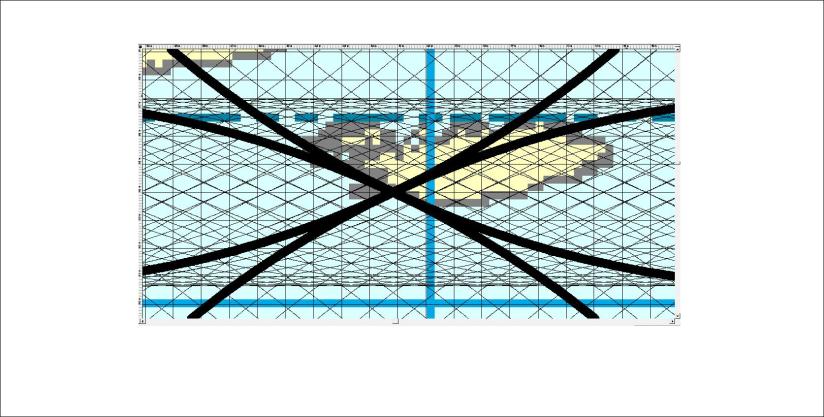
Now we zoom in on Japan to show more details. It is interesting that the convection cells are aligned directly NS at 32°N, and Japan is just north of that parallel, so here is an example of how it works:

Japan - Fuji - 01

This line is a counterpart of the main division line under Iceland:

Iceland division line

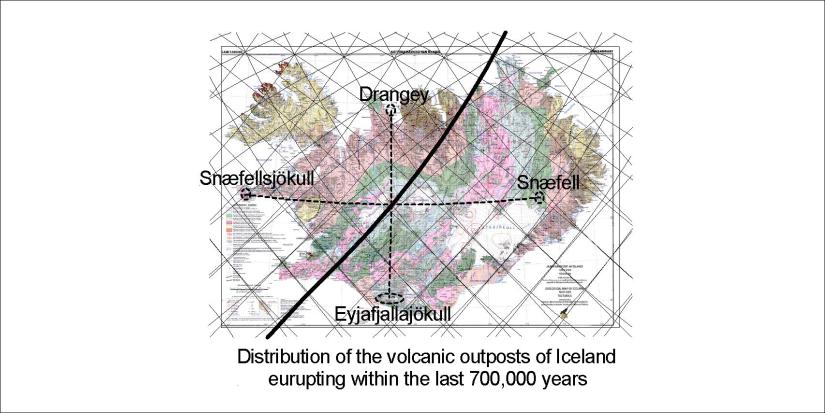
As has been pointed out in other posts, this line represents both the main convection division at 410 km depth, and the upper most division line of small cells at 120 km depth. The smaller cells are down-welling, and the two lines to each side of course up-welling.

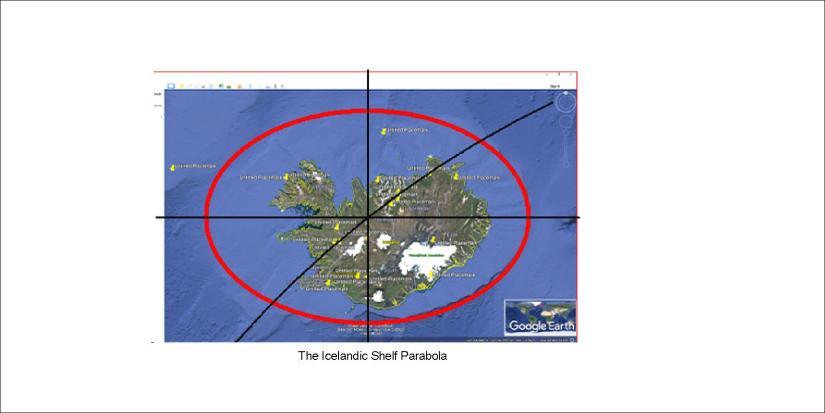
Therefore, in Iceland, The Reykjanes Ridge is found west of this line, whereas Hekla is east of it. Still, many volcanic and geothermal sites are also on the main division line, with the controversy of having up-welling deep below, but down-welling in the upper layer.

This is of course in a way complicated, but it is easy to see what Japan and Iceland have in common according to this model of the convection rolls within Earth’s mantle.


geology

Tahiti – calculated

cottages in the middle of beach
Photo by Julius Silver on Pexels.com

Tahiti is amazingly far away from any mainland. It can be compared with Hawaii, because it has a hot spot at Mehetia. The drift of the Pacific Plate creates a chain of islands. The calculated value of directions can be achieved in the same way as for Hawaii:

Tahiti 01

This is very close to the measured value of tectonic drift, that is N65°W.

The relevant convection rolls division line is found directly under Mehetia.

Here is the calculated value for Hawaii, for a quick comparison 🙂 Note that the calculations are double for Hawaii (NW and NE trending vectors), because the symmetric effect of the two convection rolls layers appears clearly.

Hawaii - 03


geology

Baffinsland and Iceland at the same latitudes – what do they have in common?

The south of Baffinsland is shaped in the same way as Iceland. Just compare these drawings:

Iceland and Southern Baffinsland

It is obvious that the main faults and coastlines follow the lines. It is also important that at 64°N, Baffinsland extends exactly 9° from coast to coast, or the width of 6 convection rolls. Just to clarify:

Iceland and Southern Baffinsland - second layer convection rolls only

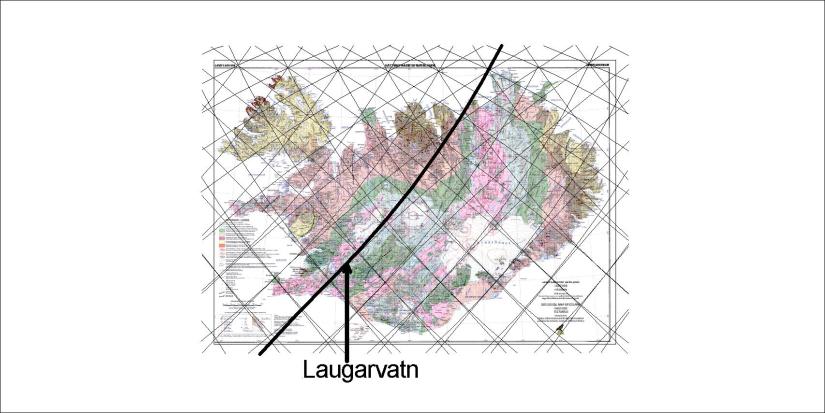
In Iceland, at the same latitude as this part of Baffinsland, the upper most (first) layer is of course more apparently shaping the surface. Here is a map of Iceland (based on a map from Náttúrufræðistofnun), and the grid has exactly the same pattern as for Baffinsland:

Iceland division line

The numerous details can then by worked out by scrutinizing these maps.