Blog

Uncategorized

Mantle Convection or Mantle Plumes?

In Iceland, many people think that a mantle plume is responsible for volcanic activity. The plume is thought to be centered around the western part of Vatnajökull. All the same Gilliam R. Foulger came to the conclusion that a plume, of the kind imaged, can not exist. https://www.mantleplumes.org/WebDocuments/P%5E2Rev_Harangi.pdf

In fact, Foulger does find a proof that this kind of plume does not exist. The relevant data shows that no continuous hot mass is ascending under Iceland. Therefore we should stop imaging this plume and continue the search for the inner structure of Earth with measurements and calculations according to the physical properties of the mantle.

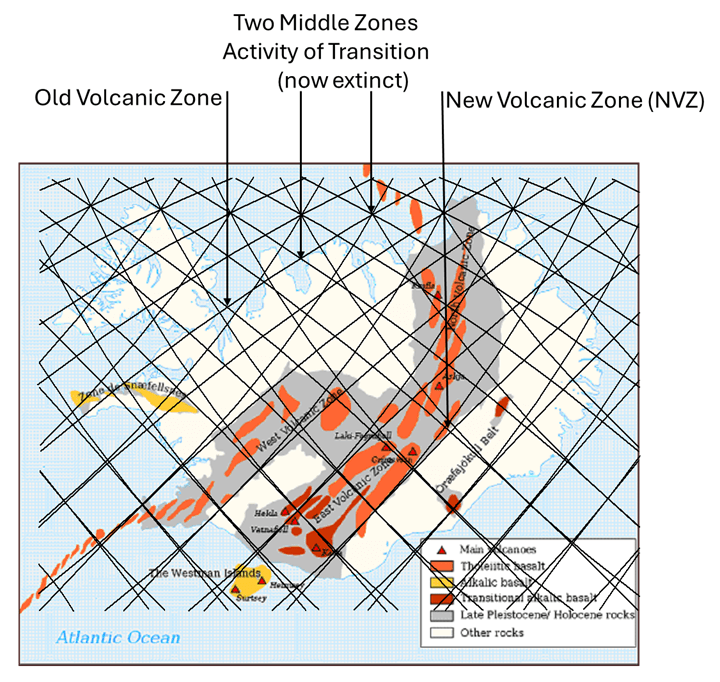
Convection does, on the other hand, fit all available data. Experiments show that mantle material forms convection rolls under those circumstances expected to prevail within the Earth. Testing it, by making a model with convection rolls filling the measured layers, shows remarkable results. Features on Earth, both divergent and convergent, fit to the convection rolls underneath.

Now, when this has been solved, it is very easy to proceed with research programs, further improving our understanding of the inner structure of the Earth. First, we have to admit that the former idea about mantle plumes is wrong. A model of a regular system of convection rolls is what brings us farther ahead. Luckily, we have the scientific method to assist us with our work. By having a foundation of physics, measurements, mapping, calculations and logical thinking, besides being able to communicate freely, these steps forwards can be made.

Uncategorized

The Ring of Fire is Circular for a Reason

The Ring of Fire is in fact circular, and 15 main parts of it are pointed out on the map below. The shape of the Ring of Fire is indeed circular, because the volcanoes of Antarctica fit into the area in between two elliptical shapes drawn with its outer limits marked by two points on equator, at the coast of Indonesia and South America, respectively. The two points are characterized by subduction zones. Let us examine this most active area in the World, in terms of seismic and volcanic activity. Looking at the arrows and lines, it is easy to understand how reality fits with the model.

  1. The first point pointed out on the map is the subduction zone of the Philippian Plate at the coast of Indonesia. It is a triple point where both the Philippian Plate and Pacific Plate meet with Indonesia. The South American counterpart on the equator is found exactly 150° west of this point. It fits to the width of five large-scale convection rolls.
  2. The Challenger Deep is the lowest point on Earth. It coincides with the inner margin of the Ring of Fire as drawn here. The convection rolls of different layers coincide with the area.
  3. Honshu Island of Japan clearly coincides with the convection rolls model, and is also within the elliptical area of the Ring of Fire.
  4. Kamchatka has been examined in other posts here, and the volcanic zone follows the alignment of convection rolls. It falls into the elliptical zone in similar way as Honshu Island.
  5. The Aleutian Islands form an arc from east to west. The easternmost part seems to follow the path of a division line between convection rolls. The central part crosses a large-scale convection roll, and the western part connects with Kamchatka. This arrangement indicates why most areas fall within the form of two ellipses, with short segments originated from convection rolls division lines.
  6. Cascadia is mentioned in two of the main articles found on this site. Subduction and divergent boundaries are found in the area.
  7. The Yellowstone National Pard is specially interesting, because usually it is not mentioned as a part of the Ring of Fire. As presented here, it is strongly related to it in two different ways. First, it is found on the circular line connecting the two points on equator. Second, it is found on the straight line of the mathematical minor of the elliptical forms, in continuation of the Central San Andreas Fault. New Zealand is on the other side of the Ring of Fire, where the other end of the said minor is found. With a little bit of logic at hand, it is then possible to analyze what kind of stress point this is, and thereby what causes the extraordinary activity level of Yellowstone Park. The usual saying, that it is a hot spot, is not enough. Of course it is a hot spot. But the settings of the Ring of Fire do indicate a complex origin of the volcanic and geothermal activity found there.
  8. The San Andreas Fault is found on the inner margin of the Ring of Fire and is used here to find that inner margin. The inner elliptical shape is not as clearly marked as the outer ring found by intersecting two obvious points on equator.
  9. Central America has some interesting features, especially volcanic activity where petrological evidence can be used to examine the explanatory value of the convection rolls model.
  10. This point has already been mentioned as the counterpart of point 1.
  11. The Galapagos Islands are found on equator in between the elliptical forms of the Ring of Fire.
  12. The Andean Mountains fit very well to both Convection Rolls Model, and the modelled Ring of Fire.
  13. The volcanoes of Antarctica are more seldom mentioned in geological literature than many others, but they are of course just as important for geological studies. The location of those volcanoes fits exactly into the circle. It indicates that the circularity is actually a precondition of the subduction zones system.
  14. New Zealand has been mentioned as a counterpart of San Andreas and Yellowstone, being on the mathematical minor of the circle.
  15.  The Australian Mountains are not mentioned as a part of the Ring of Fire, but they are found within its realms, and it is said that they are still gradually growing higher.

In this way, it can be explained that the Ring of Fire is a wholistic area. It is correct to describe it as a ring, and should be studied more extensively .

The circular form of the Ring of Fire.

Uncategorized

Hekla, Snæfellsjökull and Snæfell in a Triangle

The three volcanoes; Hekla, Snæfellsjökull and Snæfell, are distributed in a regular way. As can be seen on the map below, Snæfellsjökull and Snæfell are on the same latitude, and Hekla is found on the longitude exactly in the middle. Therefore, a triangle appears on the map when lines are drawn between these volcanoes.

Also, this triangle is consistent with the convection rolls analysis, as Snæfellsjökull and Snæfell have similar positions relative to the division lines found on the map. Hekla is found on crossings of division lines.

Snæfellsjökull, seen from the western side.

Uncategorized

How volcanic and seismic zones interact in the Reykjanes eruptions

It is well known that the interplay between volcanic and seismic zones is at work on the Reykjanes Peninsula. The peninsula is being pulled apart by the same forces as shape the Mid-Atlantic Ridge, and that is by definition a divergent effect. This causes the volcanic fissures to open up, being aligned from SW to NE. The dykes responsible for the eruptions have the same alignment, being in the same direction as the model used here. It is important that a mathematical formula can be used to calculate alignment of volcanic dykes, and it also adds to the credibility of the theory that convection rolls are found underneath the tectonic plates.

The seismic area of Reykjanes is bent, but the seismic faults are oriented N-S within the bent area. In addition, the Reykjanes seismic area extends from the South Icelandic Seismic Zone. These two seismic zones are therefore connected, and the connection point is also the point connecting two polygons of the convection rolls model. The Reykjanes seismic zone is formed due to compression of the area, perpendicular to the extension due to the divergent effect of the Mid-Atlantic Ridge. These pressure vectors are quite comparable to those of the South Iceland Seismic Zone.

What makes the Reykjanes Seismic Zone special is the fact that it is bent, making it possible to connect the Reykjanes Ridge and the South Iceland Seismic Zone. The two different forces therefore become compatible, resulting in a wholistic and logical drift system.

Superimposed blue line, showning mantle divisions, crosses the seismic and volcanic areas on the Reykjanes Peninsula, pointed out with an arrow on the map. Volcanic systems on the Reykjanes peninsula are shown in pink. The red lines indicate the tectonic plate boundary, where earthquakes are common. Geothermal areas are marked in yellow. Black lines indicate fissure swarms. Modelled division lines and the outlines of seismic zones are superimposed on a map base from ISOR.

The main active areas are found within the southern half of the bent seismic area, as it extends from the South Iceland Seismic Zone.

Comparing the model with the basics of the Oblique Rift Zone of Reykjanes does not explain the present activity to a full extent. On the other hand, it shows that the present event brings into light the combined effect of several factors, mainly the volcanic fissure swarms, the seismic zone, and the mantle rolls division lines.

A scientific approach to these three combined factors would be to compare them with petrological and seismic evidence, along with other information available about surface movements. That could answer many questions.

Not much is known about the source of this magma. It is only possible to trace its history with some degree of accuracy from the time when it is already being accumulated somewhere within the tectonic plate. The energy necessary to provide the magma is only found below the tectonic plate, and therefore the flow should be traced all the way down to the depth where convection can take place.

Uncategorized

The Ring of Fire on Equirectangular Map

Drawing the Ring of Fire on an equirectangular map, the main features fall into a narrow zone.

Two of the areas named on this map are often omitted when analysing the Ring of Fire, namely Yellowstone and Antarctica. With Antarctica included, the name ‘Ring of Fire’ can be taken literally, as a whole elliptical form is completed. Following up on this point, the circle is remarkably regular, with symmetric features, such as New Zealand, San Andreas Central Fault and Yellowstone on the minor axis. To be more precise, the San Andreas Fault is found where the inner ring crosses the minor axis, and Yellowstone is located where the outer ring crosses the same axis.

The basic idea by drawing the circle in this way, is the fact that subduction takes place exactly where equator crosses the outer ring within the Philippean Trench at the coast of Indonesia , and the Peru-Chile Trench crosses the same ring also on the equatorial line.

With a more detailed analysis, it can also be shown how the two rings follow the division lines drawn, representing the model introduced here. Examining the subduction zones one by one, a striking consistency between division lines and subduction zones is found.

Considerable research has been carried out regarding the subduction zones, and I like the work of Robert J. Stern a lot, as he has not only carried out a lot of measurements, but also contributed to the study of Earth’s history. Please read his article about the origin of subduction zones: https://speakingofgeoscience.org/2013/04/28/when-did-plate-tectonics-begin-on-earth-and-what-came-before/