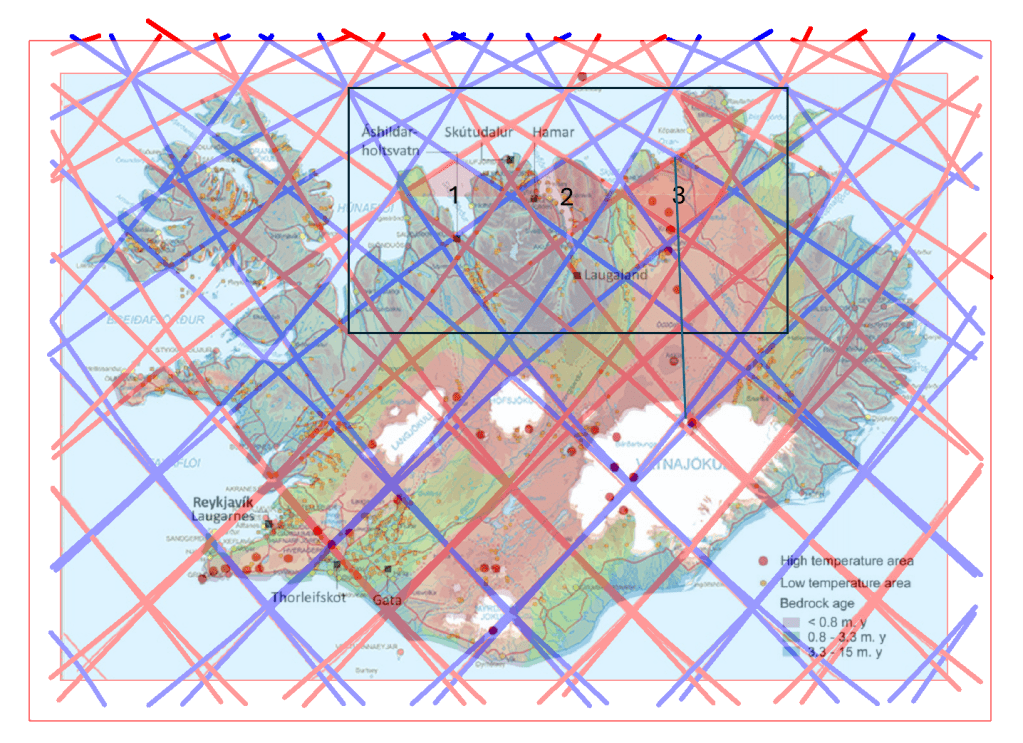
The geothermal activity of central North Iceland can be divided into three main sections: Skagafjörður, Eyjafjörður, and the Mývatn region. Skagafjörður was an active and distinct volcanic zone until a few hundred thousand years ago, after which the main rifting and volcanic activity gradually shifted eastward.
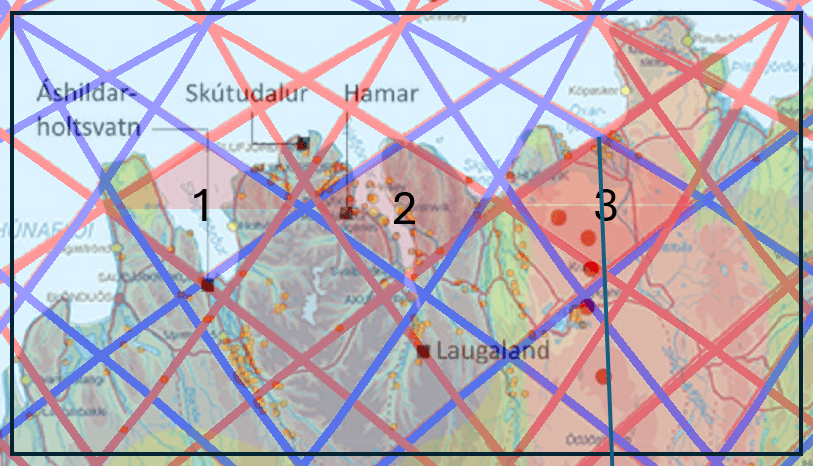
Eyjafjörður, however, remains an important area of geothermal utilization. Significant activity is found there, particularly in the Hjalteyri geothermal field, which produces around 110 liters per second of hot water. This accounts for roughly 60% of the heating supply for Akureyri, a town of about 20,000 inhabitants and often referred to as the capital of North Iceland. The use of geothermal energy here highlights how Iceland effectively harnesses subsurface heat for sustainable urban development.
Further east lies the Mývatn region, one of the most volcanically active areas in the country, centered around the Krafla volcanic system. This area has experienced numerous eruptions in historical times, including the well-known Krafla Fires in the 18th century and rifting episodes in the late 20th century. The region is characterized by high-temperature geothermal systems, extensive lava fields, pseudocraters, and active fissure swarms.
Geothermal and volcanic activity in this region continues northward beneath the surface, extending all the way to the ocean in Öxarfjörður. This follows the active plate boundary between the North American and Eurasian tectonic plates, part of the Mid-Atlantic Ridge system that crosses Iceland.
Knowing the location of convection rolls of different layers, the geothermal activity can be analyzed in more detail than previously possible. The impact of horizontal drift of the tectonic plates on one hand, and that of vertical effect of ascending magma on the other hand can be studied, and besides that local effect of horizontal flow of magma within particular convection rolls can be taken into account. Understanding those three main factors, geology becomes much more understandable.