Uncategorized

Where is the central point of Iceland?

Knowing the position of convection rolls under Iceland, geological analysis becomes much easier. For our curiosity, we can examine the central points and find out which one is most central.

Centers of Iceland

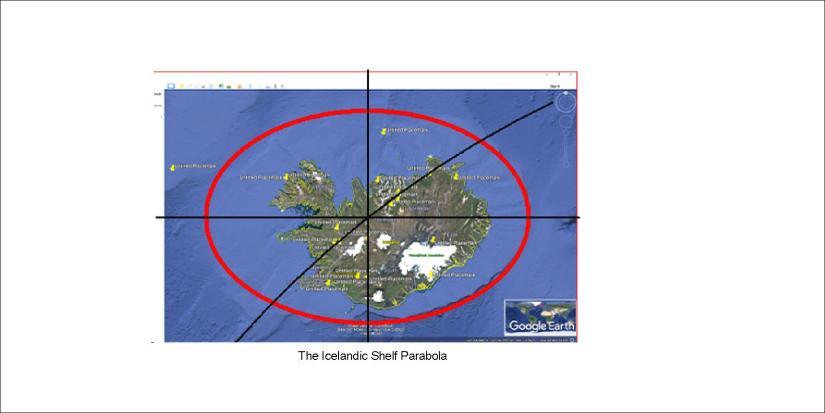
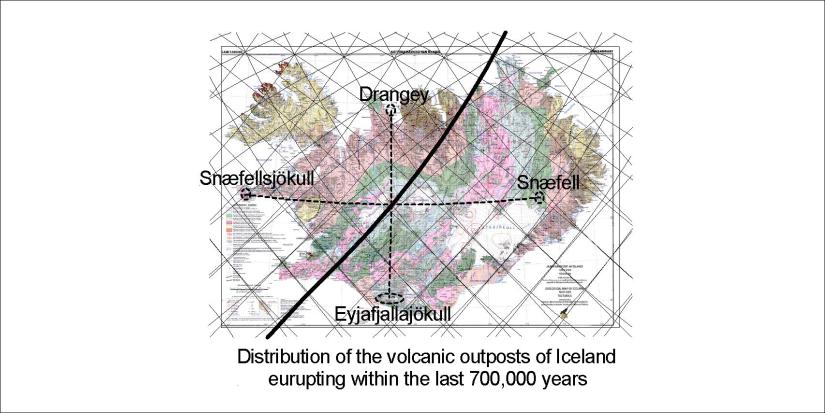
A few candidates appear. The Reykjanes Ridge has a central role for the Atlantic Ocean, but when it comes to Iceland the activity is transferred to the east. The large lower mantle convection rolls form a line from SW to NE under Hveragerði, and the relevant continuation of the circular path does also pass under Hveragerði, making it looking very centrally located. Still, the central role of the minipolygon near Hveravellir is exactly equadistance between Snæfell and Snæfellsjökull on the same latitude, and on the same longitude as Hekla and Eyjafjallajökull, giving it a special central role. The north part of the larger polygon is found to be the center of the Icelandic shelf, forming a surprisingly correct ellipse around the country.  Katla is a candidate for being most central compared to the tectonic drift vectors as measured with GPS technology.

Although the idea about hot spot is somehow challenged here, it can be mentioned that usually the hot spot of Iceland is thought to be underneath the western part of Vatnajökull Glacier. It really is a special area, where for instance Bárðarbunga has obviously a special role regarding forming dikes within the rift zone, along with Grímsvötn. The main volcanic zones connect there, so it plays a very central role.

For further reference:
Drangey 01Katla 01Landgrunnid - sporaskja

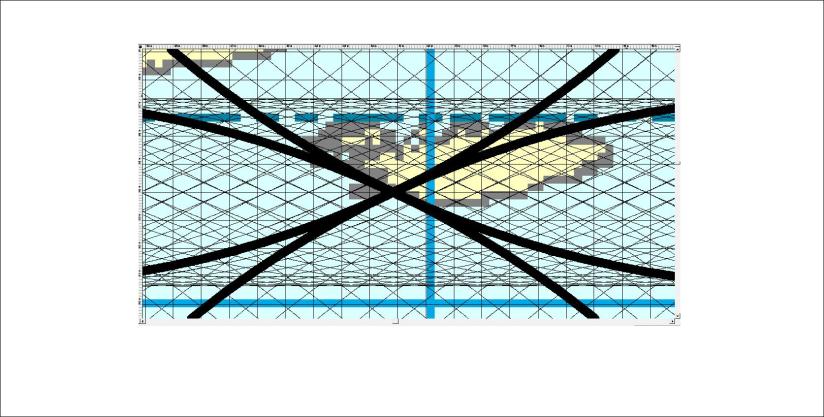
Lines of convection system - Iceland

A few different versions of central points 🙂


Uncategorized

Hawaii and Iceland – mathematics show how they are connected

The two obvious volcanic spots of the globe, Hawaii and Iceland, are located on two of the main upwelling lines between convection rolls of the lower mantle.

Hawaii - Iceland

On these small drawings it is pointed out how polygons along the main division lines are regarded as the center of the hot spots. Actually, the hot spots have to be understood by referring to the relevant division line between convection rolls.

Here it is shown that the lines of Hawaii and Iceland are exactly 120° apart.

The reason for the arch-like shape of the convection rolls is that moving objects can not flow directly on the rotating Earth. A moving particle travels along a circular path, as can be seen on weather maps. Now, when the mathematics of the relevant path of mantle currents are known, geology will never be the same again.

Actually, it has been noticed that compared with Earth’s center, Hawaii and Iceland form 90° angle.

Uncategorized

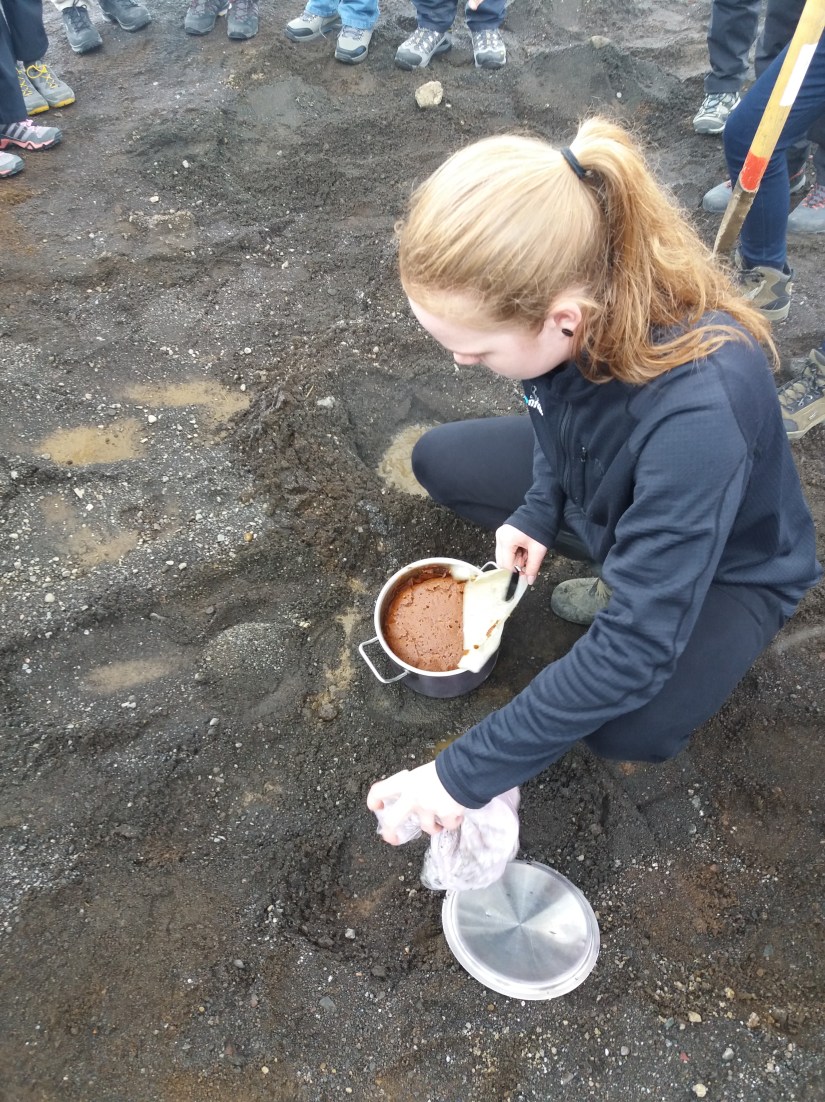
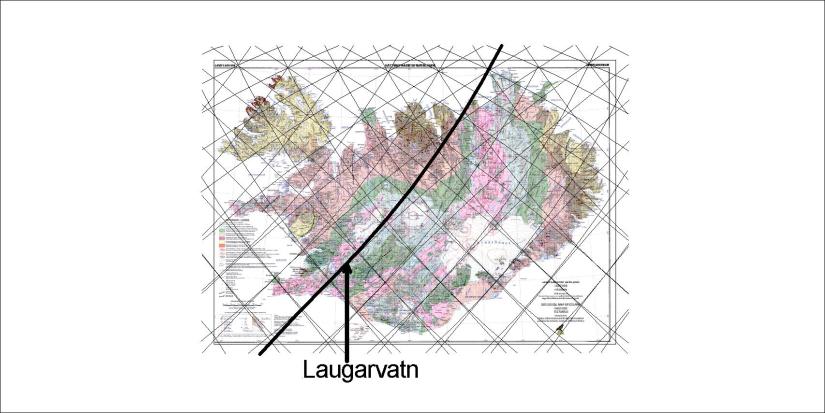
The bread baked on the upwelling line at Laugarvatn

On the division line between the N-American plate and the Eurasian plate lies the lake Laugarvatn in Southern Iceland. Baking bread in the sand at the side of the lake is an old tradition.

20180730_162718

The bread has been in the boiling hot sand for 24 hours and is now fully baked.

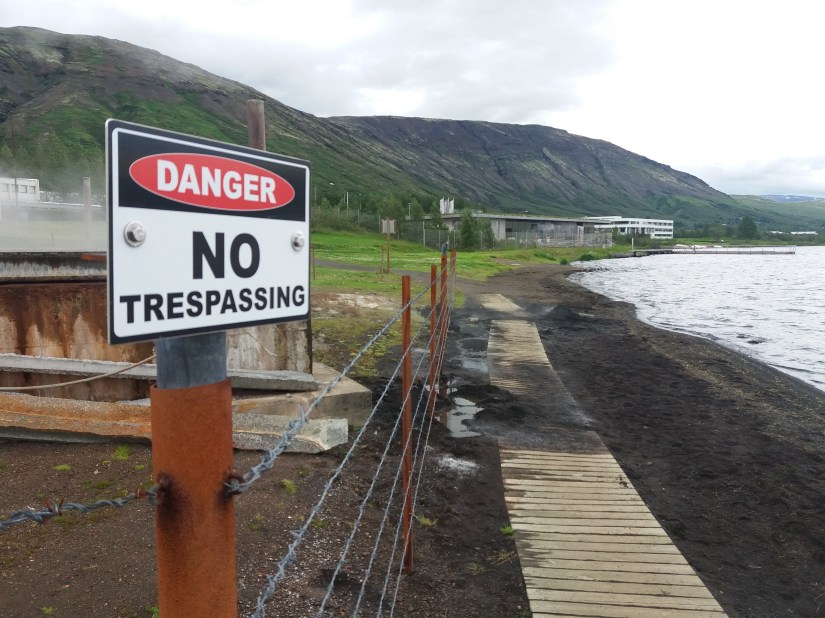
The geothermal area is quite powerful. Look at the “border line” between the plates:

20180730_162958

Clearly, this natural bakery is no usual place.

Íslandskort - grind

The “border line” with Laugarvatn.


Uncategorized

The three sides of the Earth

We can make ourselves surprised, looking at the “land side” of the Earth and then at the “sea side” of it. So different! If you keep your head cool, you can say: “Yes, here I have the land mass of Eurasia, spanning 180° along the 64th parallel from the coast of Norway to the Bering Strait. On the other side the Pacific spans 150° from Indonesia to S-America along equator.” But we should not forget the two Americas, extending NS in the form of the letter “S” due to the effect of the Mid-Atlantic Ridge, and therefore resembling in a way the shape of the convection rolls within the mantle.

earth on 3 sides - land

earth on 3 sides - ocean

earth on 3 sides - americas

Measuring and reasoning can lead to conclusions. We should know at least a little bit about what we see 🙂