
I did discuss how magma must ascend from below the descending slab. If not, there would not be enough mantle material available for partial melting, not enough heat because of the cooling effect of the slab, etc. Simplifying the picture, emphasizing on the ascending magma only, the idea can be drawn AI-style:
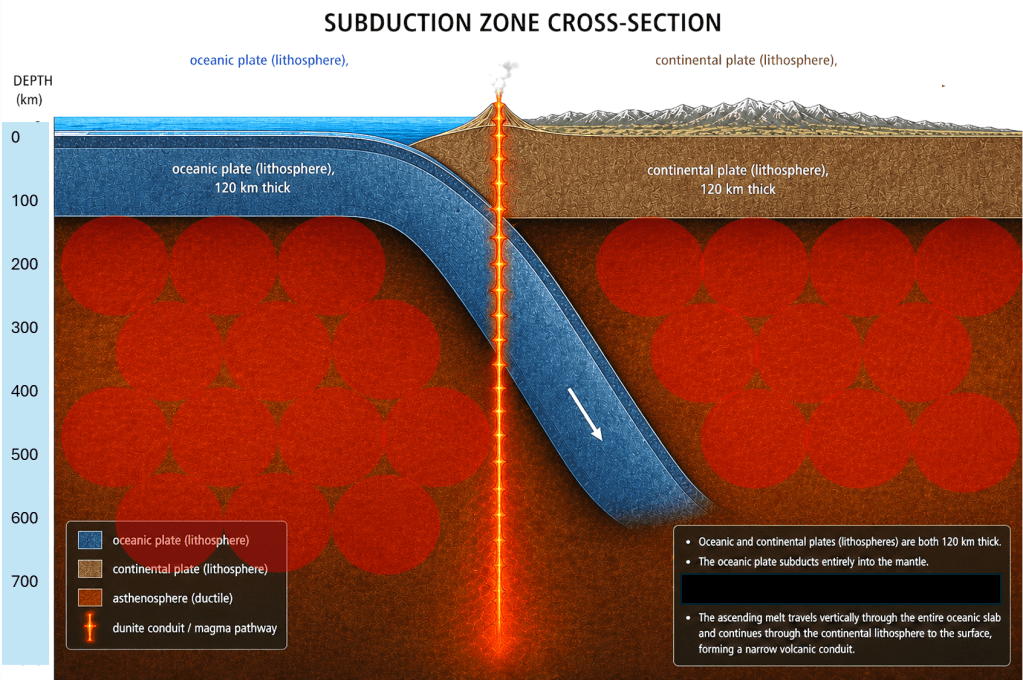
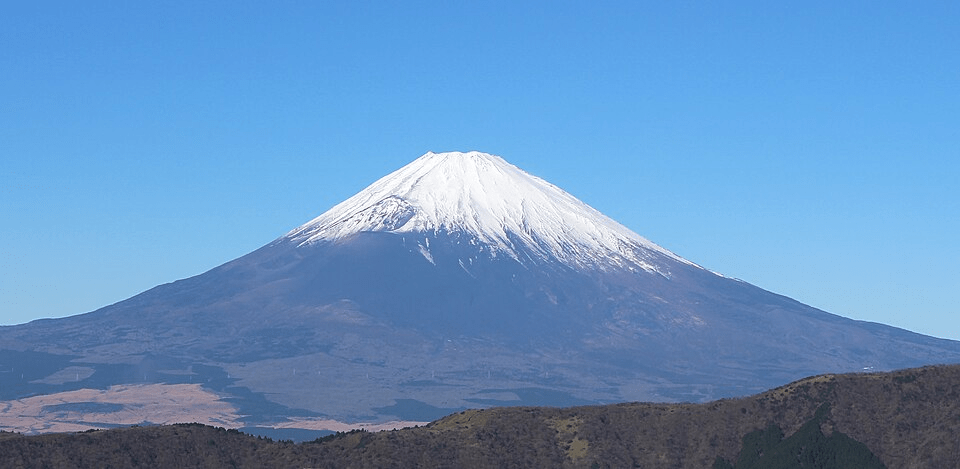
In this way the production of basalt for Mt. Fuji, for instance, can be explained.
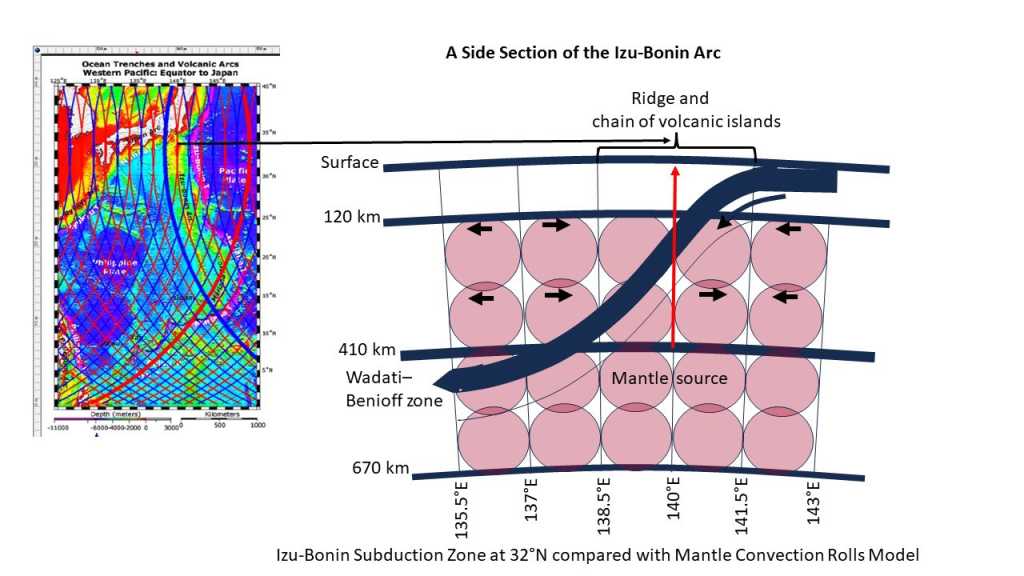
This can be tested by comparing sections of subduction zones with the model.
There are many examples of how the model shows consistency with actual circumstances, position, alignment, and length. Trenches and volcanic zones also tend to coincide with convection rolls, the trench following the scope of a roll, then one roll is found in between the trench and the volcanic roll, and finally the bulk of volcanic activity is found in context with one roll. These three rolls are parallel to each other. The volcanic activity also tends to terminate at the border of a polygon. Here, two examples of this type of subduction are provided, from different corners of the Pacific Ocean:
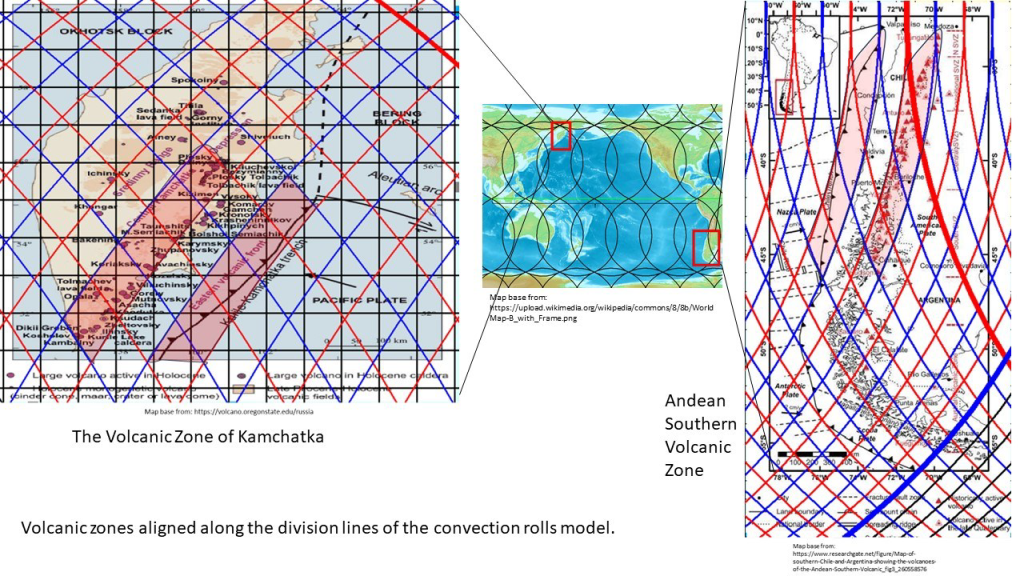
The geology of these areas should then be analyzed for each of those diamond-shaped areas marked on the maps.


