
There are two main rules governing the distribution of high-temperature geothermal areas:
(1) their location along the boundaries between tectonic plates, and
(2) their alignment with the boundaries of mantle convection rolls.
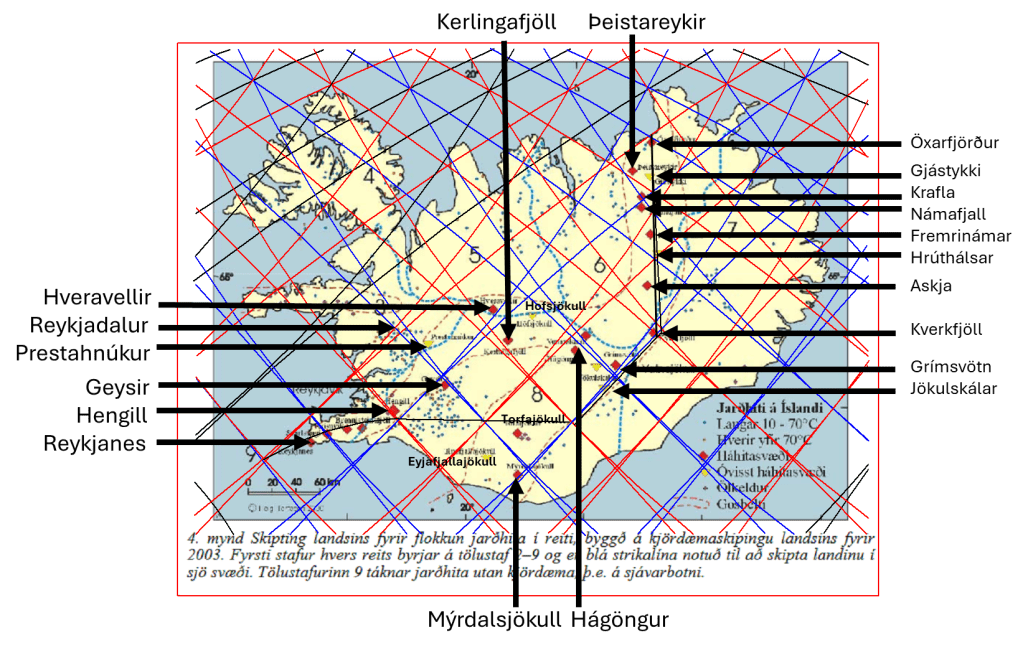
Not all the high-tempereature areas are directly “pointed at” here, because the purpose is not to show a list, only that the location of those areas can be linked to an understandable process within the whole tectonic plate. Intrusions of magma were responsible for all those formations.
In practice, almost all high-temperature areas are located either directly on, or immediately adjacent to, these lines. The main exceptions are Eyjafjallajökull, which is known to be connected to its neighbouring system beneath Mýrdalsjökull, and Hofsjökull, where the presence of a high-temperature area is somewhat uncertain. Map base: https://vatnsidnadur.net/wp-content/uploads/2023/12/NI-03016.pdf
The Torfajökull area lies somewhat distant from the plate boundary, yet it is the largest and most powerful of all high-temperature systems in Iceland. However, the area is highly fractured, suggesting that its roots may extend toward the plate boundary at depth.
Taken together, all 24 areas appear to occur within a similar structural context. Not every area is pointed out with an arrow, but in this way the consistency becomes more obvious.
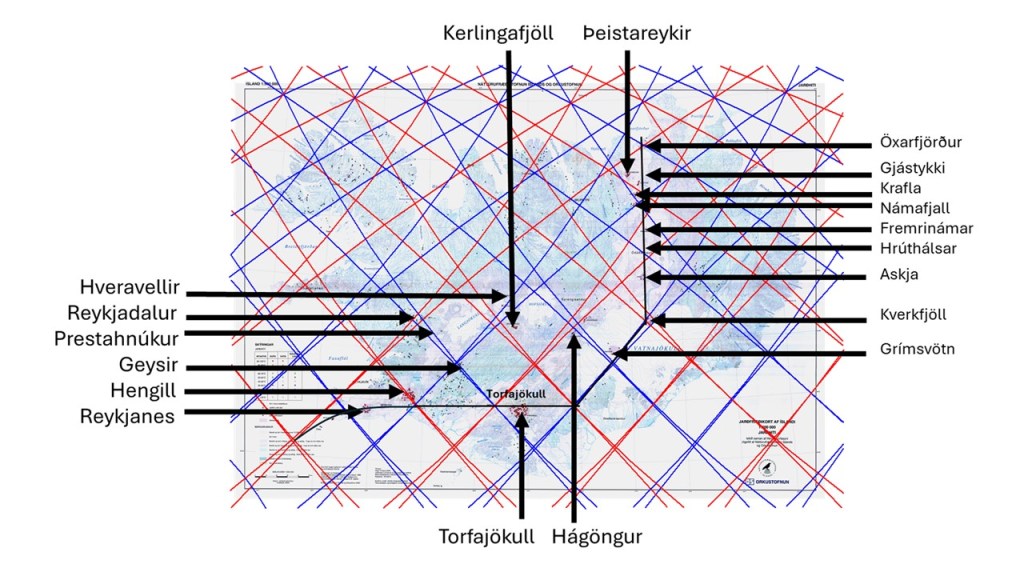
This map is more accurate, and the consistency becomes more obvious. On the other hand, the locations are less clearly marked. Comparing those two maps is therefore ideal.
The fact that two different factors are relevant here, division between tectonic plate and convection rolls division lines is of course intriguing. It must be kept in mind that the origin of these lines is to be traced 120 km below the surface. This AI drawing tells a story:
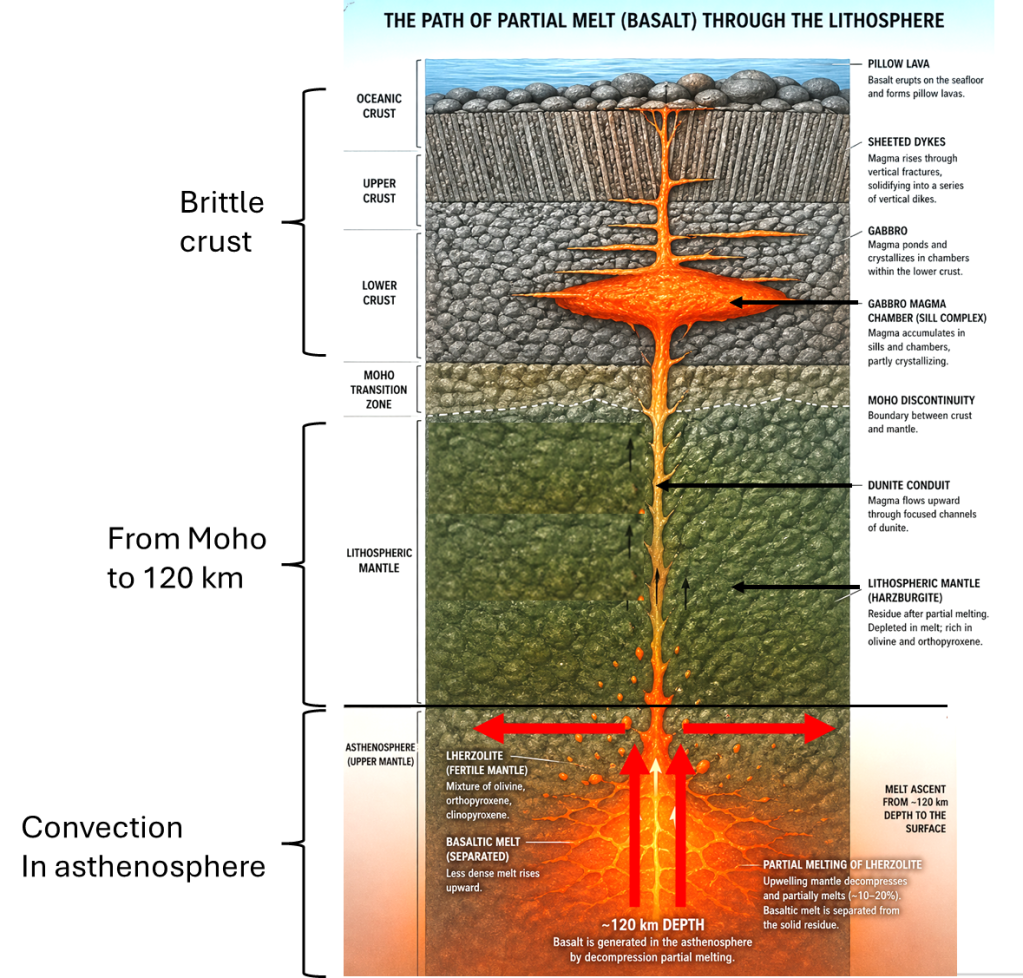
The remarkable aspect is how precisely the vertical flow from asthenospheric roots appears to be aligned along the boundaries of convection rolls. In contrast, along plate boundaries, according to this model, magma travels laterally before ascending at its final location. The divergent tectonic process creates pathways that allow magma to accumulate in these zones, leading to the formation of high-temperature geothermal areas.
List of Main High-Temperature Geothermal Areas in Iceland:
- Hveravellir
- Reykjadalur
- Prestahnúkur
- Geysir
- Hengill
- Reykjanes
- Kerlingarfjöll
- Mýrdalsjökull
- Hágöngur
- Vonarskarð
- Þeistareykir
- Öxarfjörður
- Gjástykki
- Krafla
- Námafjall
- Fremrinámar
- Hrúthálsar
- Askja
- Kverkfjöll
- Grímsvötn
- Jökulskálar
- Hofsjökull
- Eyjafjallajökull
- Torfajökull


