Uncategorized

Thingvellir – a rift valley

Lake Thingvallavatn and the western edge of the Thingvellir Rift Valley.Þingvellir
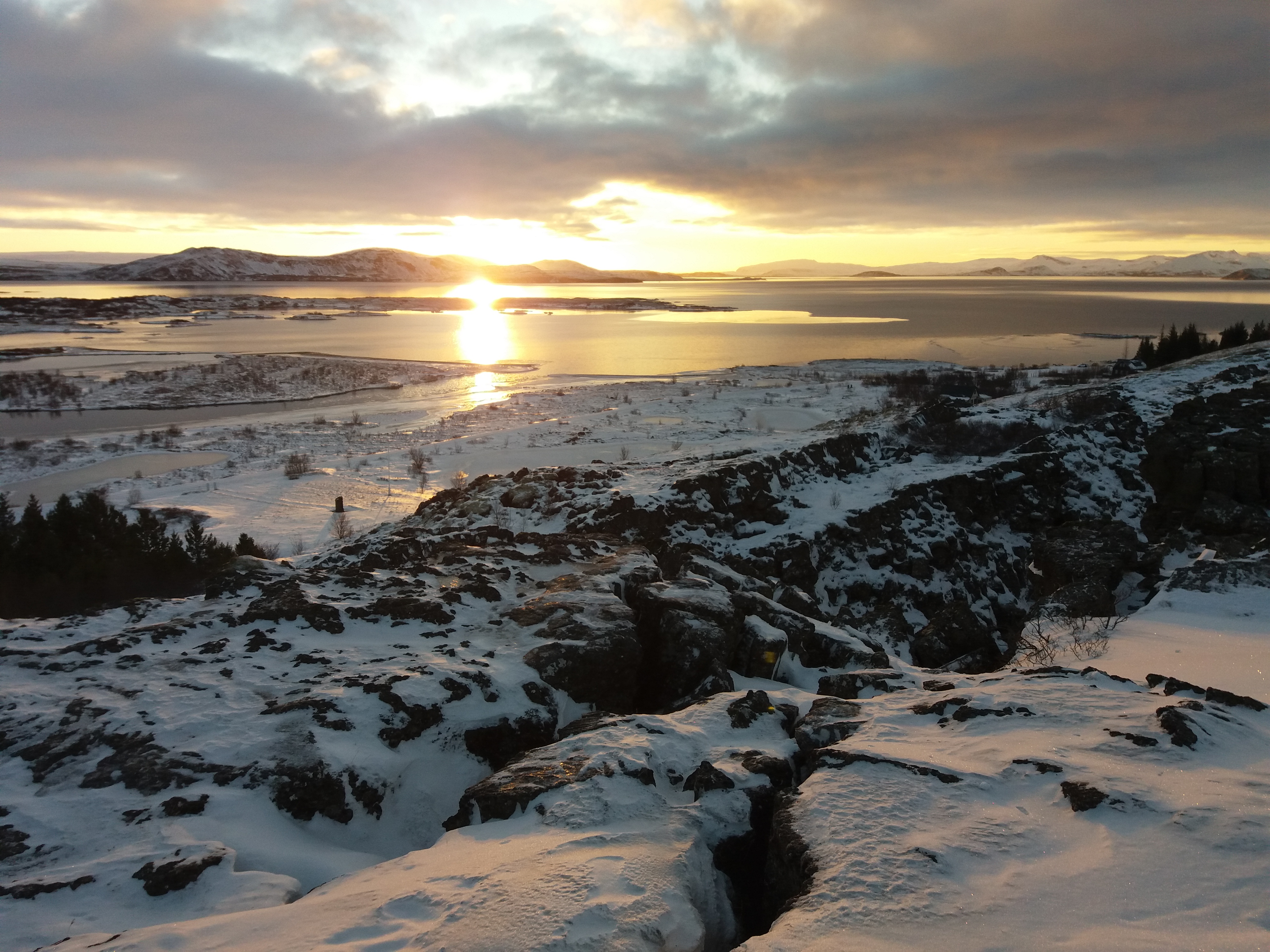
Thingvellir is Iceland’s no. 1 national park, with its history of the oldest national assembly still operating in the world and the rift valley forming due to tectonic drift. Those who study the tectonic plates thoroughly can see that the main division line according to measurable drift directions is found along the South Iceland Seismic Zone. Therefore, Thingvellir area does drift to the NW, but being located at the western edge of the West Volcanic Zone – which is a rift zone – it can be regarded as a continuation of the top of the Mid Atlantic Ridge along with other areas of the two rift zones of Iceland. The two plates of N-America and Eurasia are so large that taking the so-called Hreppar microplate into account is somehow trivial. To me, Thingvellir represent the division between Europe and America quite clearly. If the western edge is for sure the beginning of the N-American plate, then the other side of the rift valley can be represented as the Eurasian part of Iceland. Logical enough?
Uncategorized

Bárðarbunga – following magma trail

Today there two earthquakes were measured at Bárðarbunga – 3.9 on Richter Scale. Besides that, water from its geothermal areas probably finds it way from there to the river Jökulsá á Fjöllum.

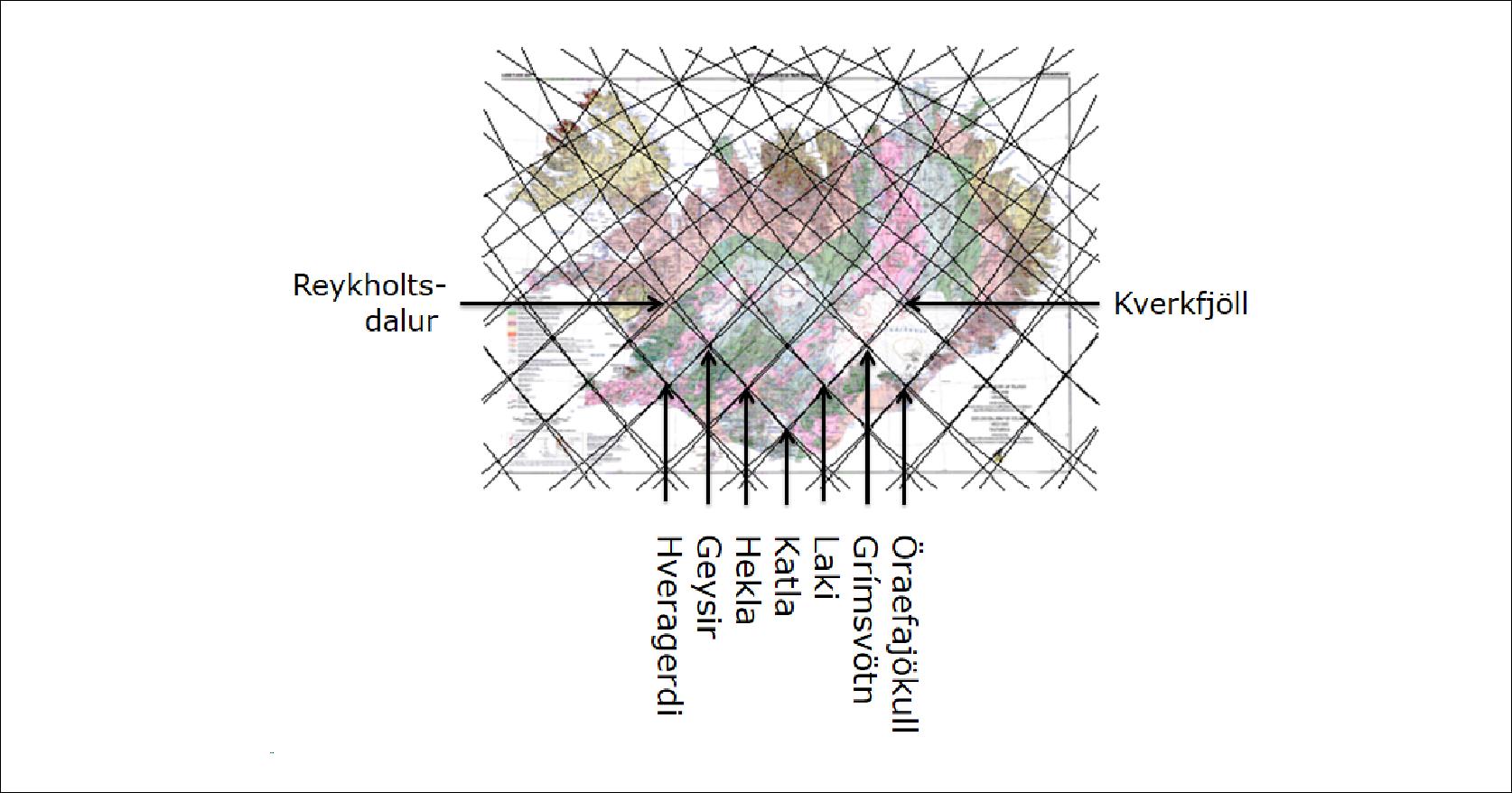
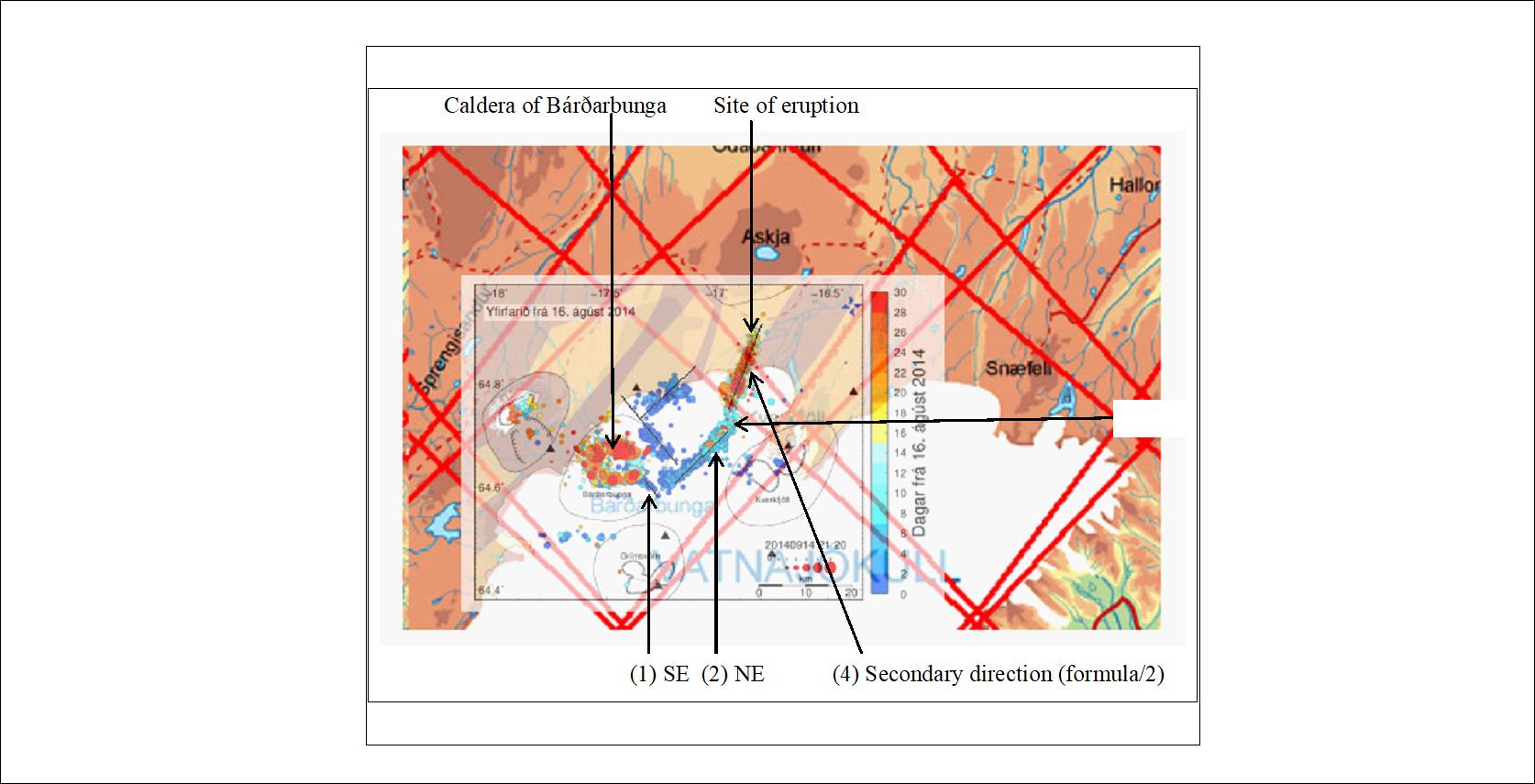
In 2014 the volcanic site of Bárðarbunga erupted. It was called the Holuhraun eruption, because the lava came up to the surface about 45 km away from its place of origin. How can magma flow so far, thereby forming a dyke, and then eurupt? The bedrock around is much colder, cooling the magma down over such a long distance. By looking at a map of convection cell system it becomes understandable.

First the magma did flow to the SE, perpendicular to the rift zone! It is explainable, because the convection cell system under Iceland always provides lines more and less perpendicular to each other forming polygons. Then the magma turned 90° to the NE along the rift zone. When close to the NE edge of the polygon it turned to the north, and on the relevant line turned slightly to the right and over to the next intersection line between two adjacent convection rolls. Then eruption occurred, the largest lava flow in Iceland for 230 years!

The explanation must be that extra magma was added from below, when the dyke material was flowing above the convection rolls line, causing it to erupt.

Bárðarbunga magma trail

The drawing shows how I combined information from the Icelandic Meteorological Office Web Site with the lines formed by the convection rolls below. It is curious enough that all the directions resemble calculations, and similar calculations can be repeated for tectonics all around Iceland.


Uncategorized

Öræfajökull – strange position?

20171025_145202

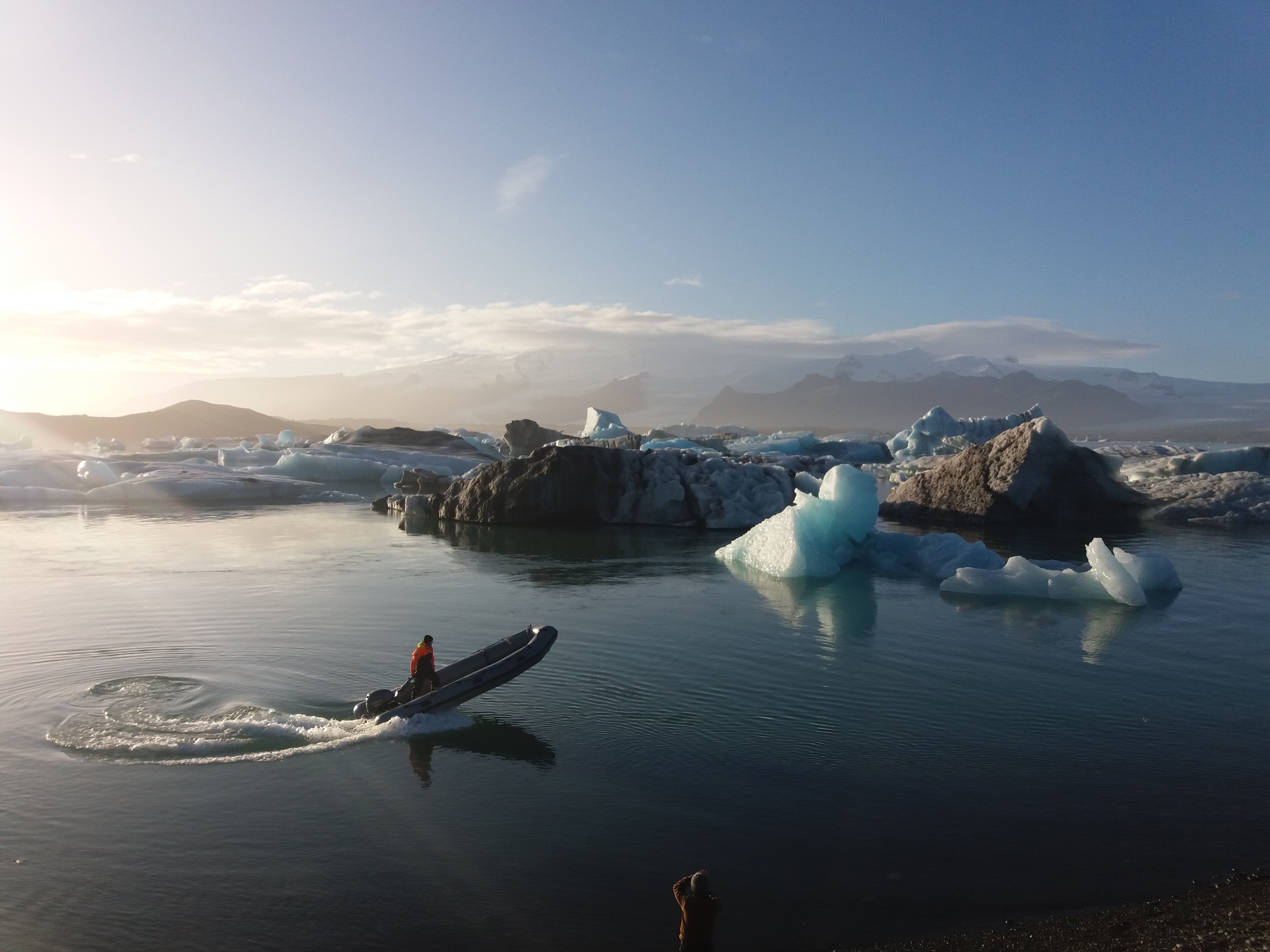
Jökulsárlón (Glacier Lagoon) with Öræfajökull in the background.

The position of Öræfajökull fits exactly to the arrangement of convection cells under Iceland. Recently, quite many earthquakes were measured below the SW part of the mountain. At the 64th parallel all the four layers are equally thick. It is the latitude where the convective layers from north and south meet and arrange themselves in a regular pattern. You can see a drawing showing this at the front page of this website. Accordingly, the flow of magma is probably originated about 120 km below the surface, first flowing through the ductile part of the tectonic plate and then making its way with help from the constant work of the other three layers on the same point up through the brittle part of the crust.

This is of course not easy to understand at first, but along the 64th latitude both Hekla and Öræfajökull are over crossings of these four convective layers.

As this convection cell system can be put into a mathematical form according to some very simple preconditions, we can understand why Öræfajökull has this location on the 64th parallel. Is that enough for us?

Basics

Uncategorized

Tectonic drift

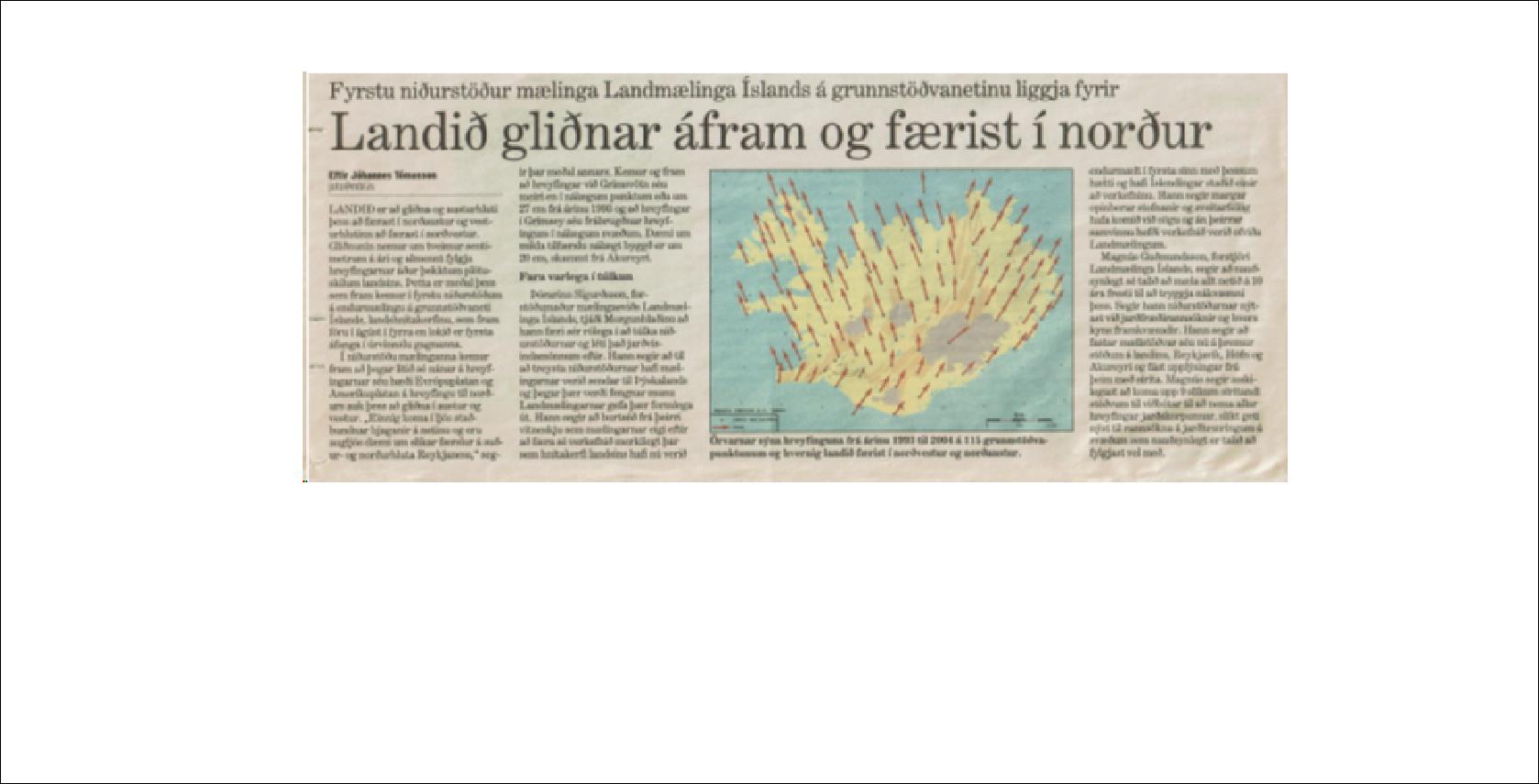
Morgunblaðið published this map in June 11th 2004. The title can be translated: The land is still widening and moves northwards. The same map was then published in a booklet – ISNET2004 – by Landmælingar Íslands (National Land Survey of Iceland). On page 37 it is repeated that Iceland drifts to the north.

Basics - landrek - Ísland

To clarify this further: Iceland drifts closer to the North Pole, away from equator.

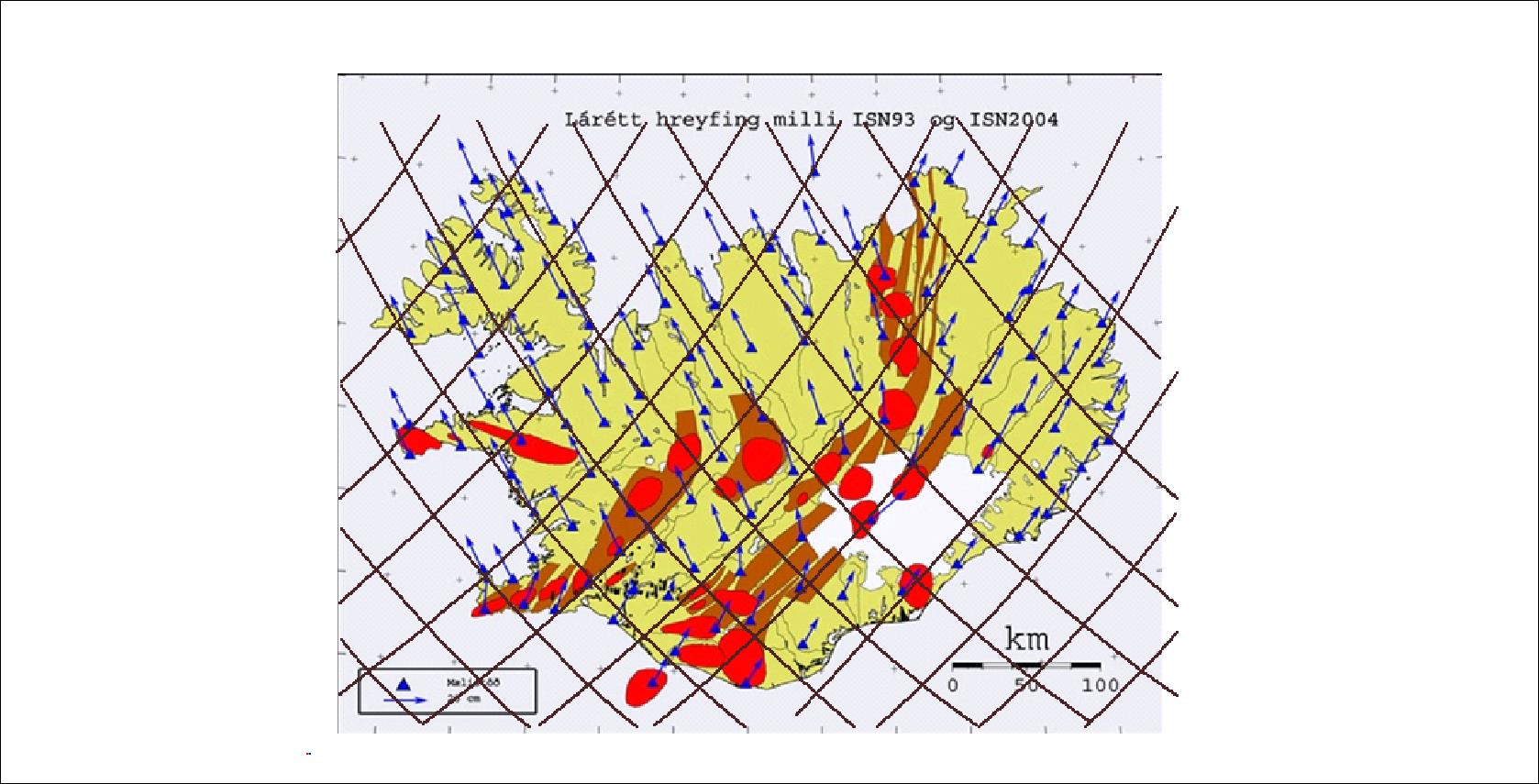
The results presented with ISNET2004 fit accurately with the convection cell system extending from the North Pole over Iceland, as shown here:

Basics

Note the symmetry and how exactly the vectors fit with the calculated lines in the East and West of Iceland.