Blog

Uncategorized

Waiting for an Eruption

For those interested in geology, waiting for a predicted eruption must be exciting. It might even divide the geological community into two different teams, one being pro-eruptive, and the other not so sure about eruption to occur for a while. Having seen seven eruptions since december 18th 2023, the process seems to be quite well known. The land has risen to a certain level and then eruption has begun. This time the same thing is happening again, land has risen to a maximal level, and eruption is logically around the corner.

The graph from the Icelandic Meteorological Office shows how land has risen repeatedly to a similar level until an eruption was triggered. But we have other theories: 1) Some geologists are not so sure that the same story will be repeated this time. The present line showing how the surface is rising could be extrapolated to meet with an asymptote, not leading to an eruption at all, as drawn above. 2) Some say that because the accumulated magma in the reservoir responsible to the measured rising of the surface is heavier than the surrounding rock, and the bottom of the reservoir should therefore be subject to isostatic changes. The bottom of the reservoir should then be sinking, and the inflow of magma would therefore not be measured correctly, if only calculated according to the uplifting of the surface. 3) Some say that the sequence of eruption at Sunhnúkar Crater Row is over, and the next eruption will probably occur farther to the west at the so-called Eldvörp https://www.visir.is/g/20242528665d/spair-naesta-gosi-1.-mars. 4) Some say that the rifting process due to tectonic drift is temporarily over. Therefore there is not enough tension for further division, and without such an event pressure is not diminished and the volatiles will not be released within the magma in the reservoir and dyke. Therefore the eruption seems to be already overdue. Who is right?

Uncategorized

The Mid-Ocean Ridge of Iceland – How Does it Work?

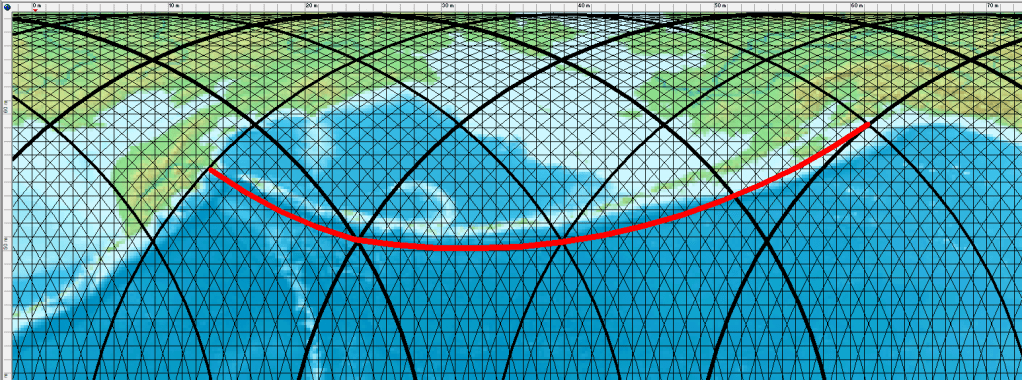
The division between the North American Tectonic Plate and Eurasian Tectonic Plate through Iceland can be seen on this map. The mid-ocean ridges have a rift valley on the top, clearly marking the division line. Iceland has volcanic zones instead, found farther east.

The main volcanic zones show some resemblance with the mid-ocean ridges. The eastern edge is parallel with the Reykjanes ridge, 1.5 degrees farther to the east for the West Volcanic Zone, and 4.5 degrees farther east for the East Volcanic Zone. The Öræfajökull Volcano is found 6 degrees farther east. On the map, the two ridges have been connected with a red line.

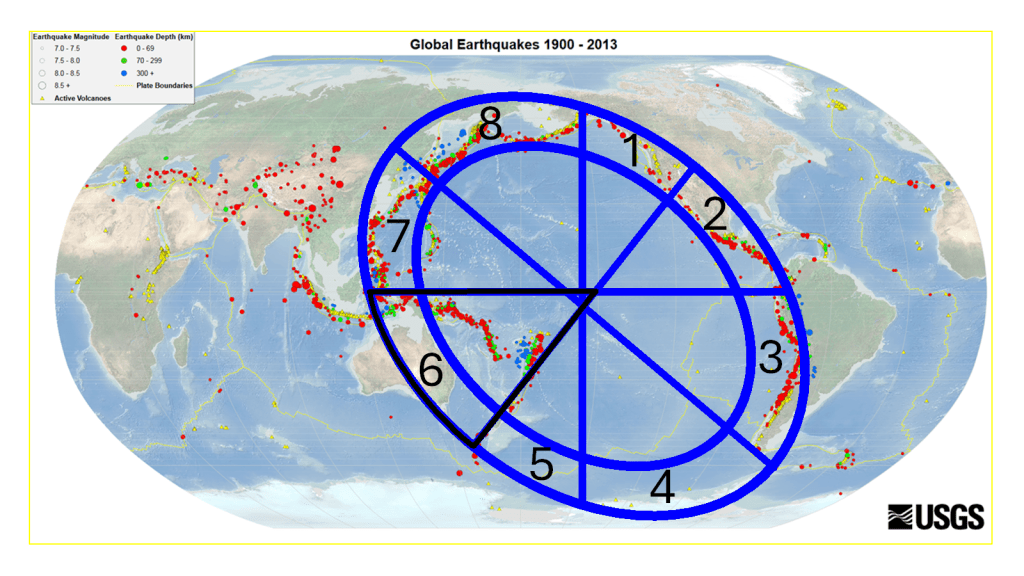
Iceland is located on an abyss, roughly elliptical, clearly seen on maps showing the depth of the ocean. Marking that elliptical form and comparing with the connection between the relevant mid-ocean ridges, the connection point between the ridges and the central point of the ellipse are found to be one and the same point.

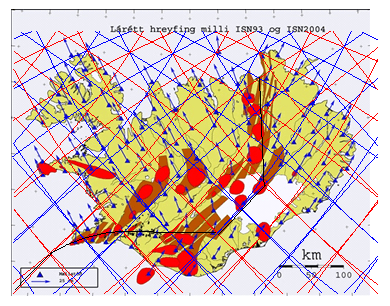
Looking into the details of all the volcanic zones of Iceland, it becomes clear that they can be divided into relatively small polygonal areas, mainly diamond-shaped. These polygons are marked here, and it turns out that practically all the volcanic zones can be divided into two polygonal areas.

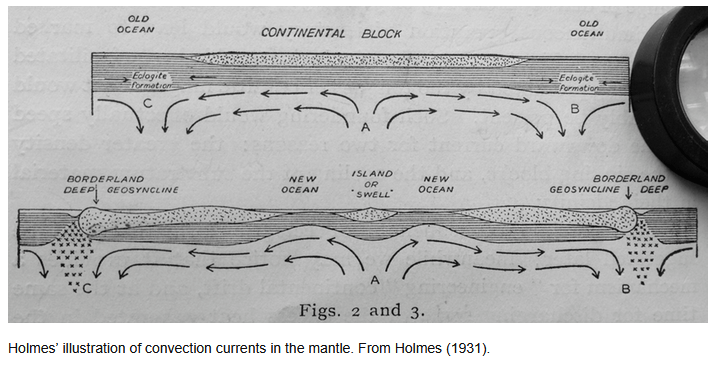
All of this is derived from one and the same analysis of convection rolls within the mantle, presuming that it behaves in the same way as it does when heated under pressure in laboratory environment. It has been found that convection rolls form under those circumstances, of equal hight and width. Making a model, inserting convection rolls into the mantle of the Earth, leads to these conclusions.

All the geological procedures, and the consequences described here, thereby become readily understandable. Here are hundreds of other posts showing various aspects of how the mantle affects the surface of the Earth. Each of them has some additional indications.

Uncategorized

The Transitional Volcanic Activity of North Iceland

North and South Iceland seem to be quite different, as there are many volcanic zones active in the south, but only one in the north. The North Volcanic Zone (NVZ) in the north-eastern part of the country replaced the volcanic zone in Húnaflói, extending from Snæfellsnes Peninsula. But volcanic activity has been found in between these two zones in the past, mainly 1-2 million years ago. The Skagafjörður Volcanic Belt was a rift zone, widening the fjord by about 10 kilometers until activity came to an end. Also, activity did occur north of Eyjafjörður, and created for instance Grímsey, where the rocks are known to be around 1 million years old. https://www.visindavefur.is/svar.php?id=4435

This map shows how the transition has taken place in steps of 1.5° from west to east. The map base is from Wikipedia, the lines represent the pattern of division lines resulting from convection within the mantle.

Uncategorized

Why Convection Rolls of the Mantle Form a Regular Pattern

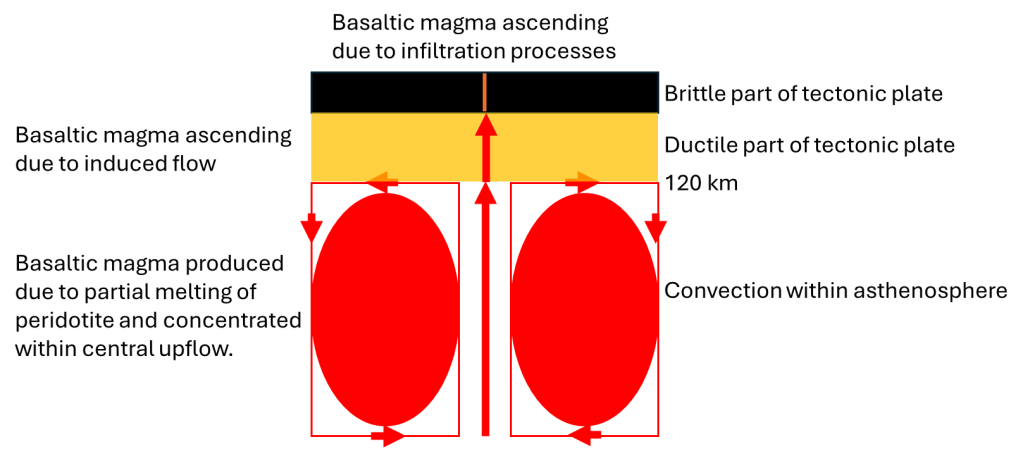
Convection rolls within the mantle have an adiabatic heat gradient, starting at the border between tectonic plate bottom and the layer below. Logically, the mantle must therefore as a whole be on the verge of being ductile and stagnant. A tectonic plate is 120 km thick, according to the defination that its lowermost border is where convection, or constant flow of mantle material, is found.

It has been found in laboratories, that if mantle material at this point (convecting but very close to becoming stagnant) does form convection rolls. As reality and experimental results are to be compared, especially if no other factors affecting real circumstances than used during experiment can be pointed out, inserting the outcome of experiment into known and measured circumstances is indeed a piece of work any scientist should undertake.

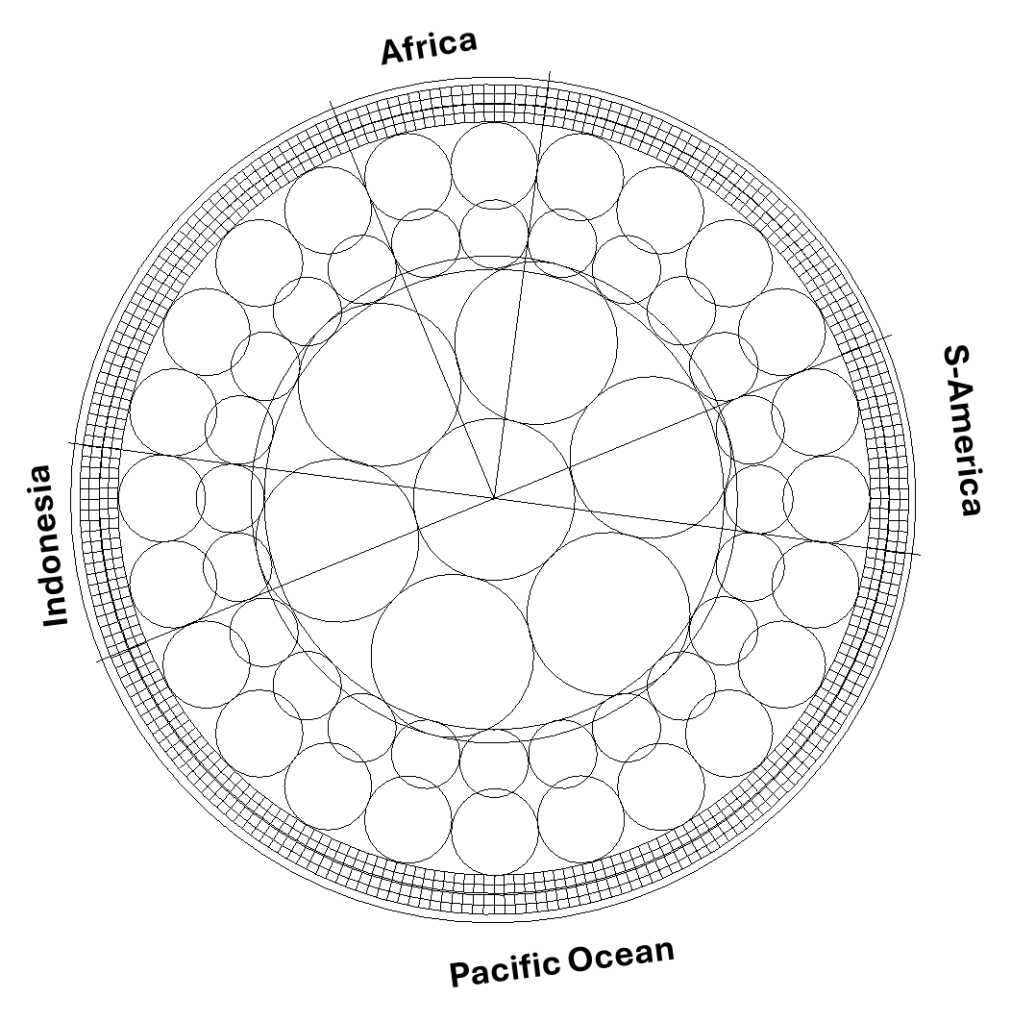
In this case it is easy, because the thickness of inner layers of Earth are known. Putting togherher the outcome of the experiments in laboratories, the logic of adiabadic thermal gradient, and knowledge about the depth of each layer, this is the outcome:

This is the basic picture of a section of convection rolls within the Earth. Inserting the results of experiments, fits exactly into measured environment.

Most people recognize the core, mantle and crust, and some might notice the Gutenberg layer, also known as the core-mantle boundary or CMB. This is a beginning of a study described in the book found here on this webpage. Reading that book is of course more difficult than reading this short post, and most people do certainly not have time enough to read it. It can be said here, though, that all the implications have been worked out, and how the convection rolls form a 3D system within the Earth is thereby fully understood. In turn, it enhances our overall understanding of geology.

Uncategorized

V-shaped ridges, Surtsey, Fagradalsfjall and Ljósufjöll

The eruptions of Surtsey and Fagradalsfjall can be compared with the recent seismic activity of Ljósufjöll volcanic system at the roots of the Snæfellsnes Peninsula. The V-shaped ridges found on the Reykjanes Ridge also fit into that comparison.

All this activity is found to take place during a little more than half a century. Considering the central location of the Reykjanes Ridge, and the seismic zone associated with both the Reykjanes Oblique Belt and the Borgarfjordur West Lowlands Seismic Zone, it seems more and more logical that these areas can be compared in many ways. Here is another post:

.https://magicmagma.com/2022/09/17/similarities-between-fagradalsfjall-eruptions-2021-2022-and-surtsey-eruptions-1963-1967/