
The system of lower mantle convection rolls, divided into two layers, looks like this:
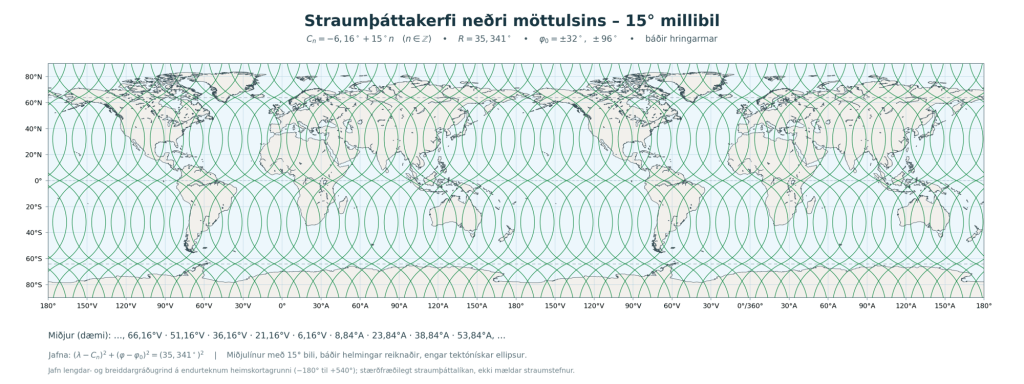
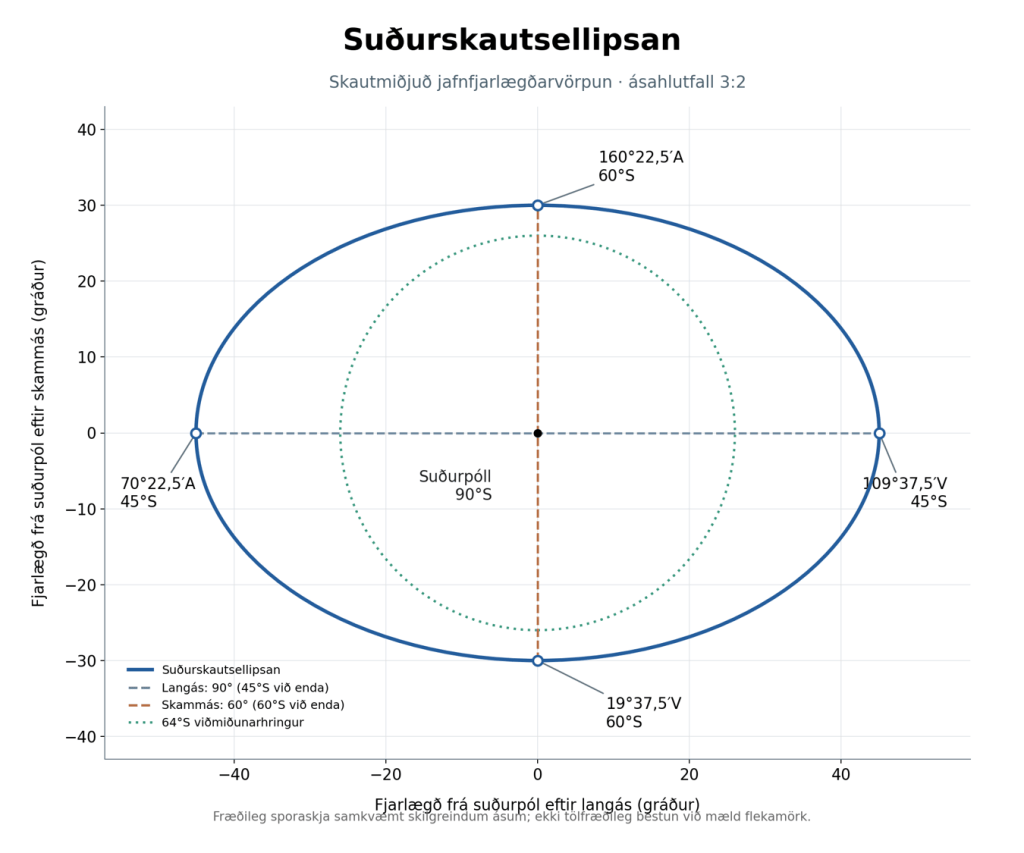
To understand its derivations, let us first look at the South Pole:
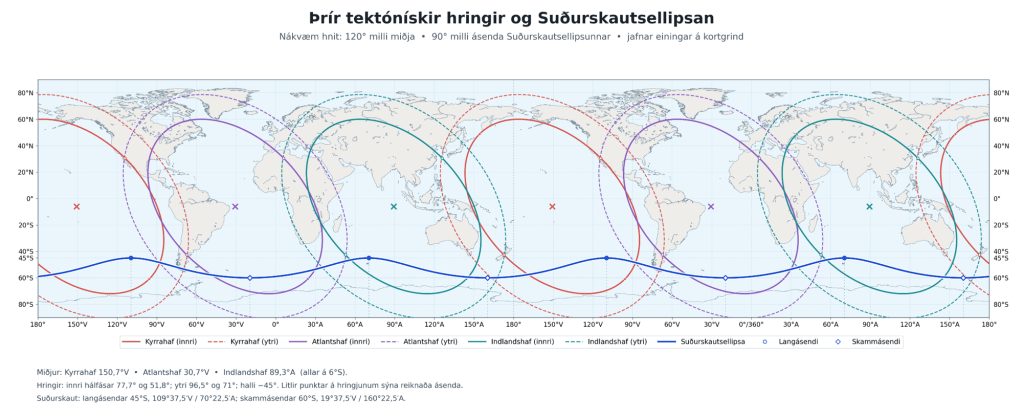
The four axes of the Antarctican Plate can then be presented:
Combining convection rolls system and tectonic rings:
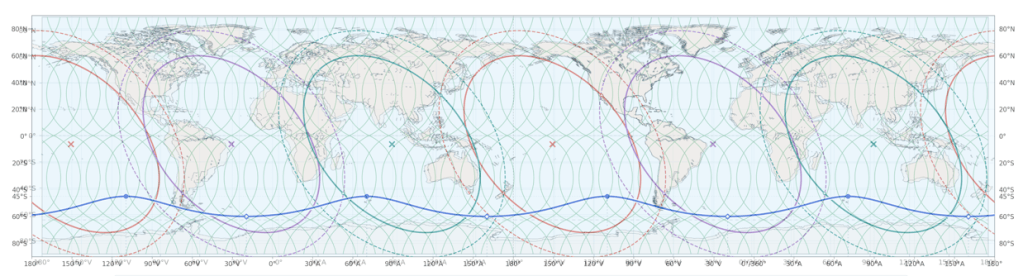
Convection Rolls, Tectonic Rings, and the Antarctic Plate: A Global Geometrical Relationship
The Convection Rolls Model provides a geometrical framework for examining the relationship between mantle convection, tectonic plate boundaries, and the global distribution of geological activity. In this model, the lower mantle contains a system of circular convection components, arranged at 15° longitudinal intervals. Their geometry is defined by a radius of approximately 35.341°, with changes in the configuration of the flow components at the equator and at 64° north and south.
Within this framework, three major elliptical tectonic ring systems can be identified: the Pacific Ring of Fire, the Indian Ocean Ring, and the Atlantic Ocean Ring. Their centres are positioned at 6°S, separated by exactly 120° of longitude. Each system consists of an inner and outer ellipse, with the inner ellipse having a major-to-minor axis ratio of 3:2. The rings overlap in regions where different tectonic processes interact, including subduction, continental rifting, and ocean-floor spreading.
The Antarctic Plate occupies a particularly important position within this global arrangement. Its proposed elliptical geometry is centred on the South Pole, with a major axis extending to 45°S and a minor axis extending to 60°S, giving the same 3:2 ratio. The major-axis endpoints are aligned with the Indian and Pacific oceanic ridge systems, while the minor axis extends between the Ross Sea and Weddell Sea sectors. These relationships suggest that the Antarctic Plate may represent an important geometrical component connecting the three tectonic ring systems.
An additional relationship emerges when the elliptical form of the Icelandic shelf is considered. The shelf can be approximated by an ellipse with a 3:2 axis ratio, centred near 65.54°N. Its north–south minor axis follows the meridian at 19°37.5′W. Remarkably, this is the same great-circle plane as the minor axis of the Antarctic ellipse, which extends between 19°37.5′W and 160°22.5′E through the South Pole.
Thus, the Icelandic shelf, the Antarctic Plate, and the three major tectonic rings exhibit a series of geometrical relationships involving axis ratios, orientations, longitudinal alignments, and intersections with the convection-roll system.
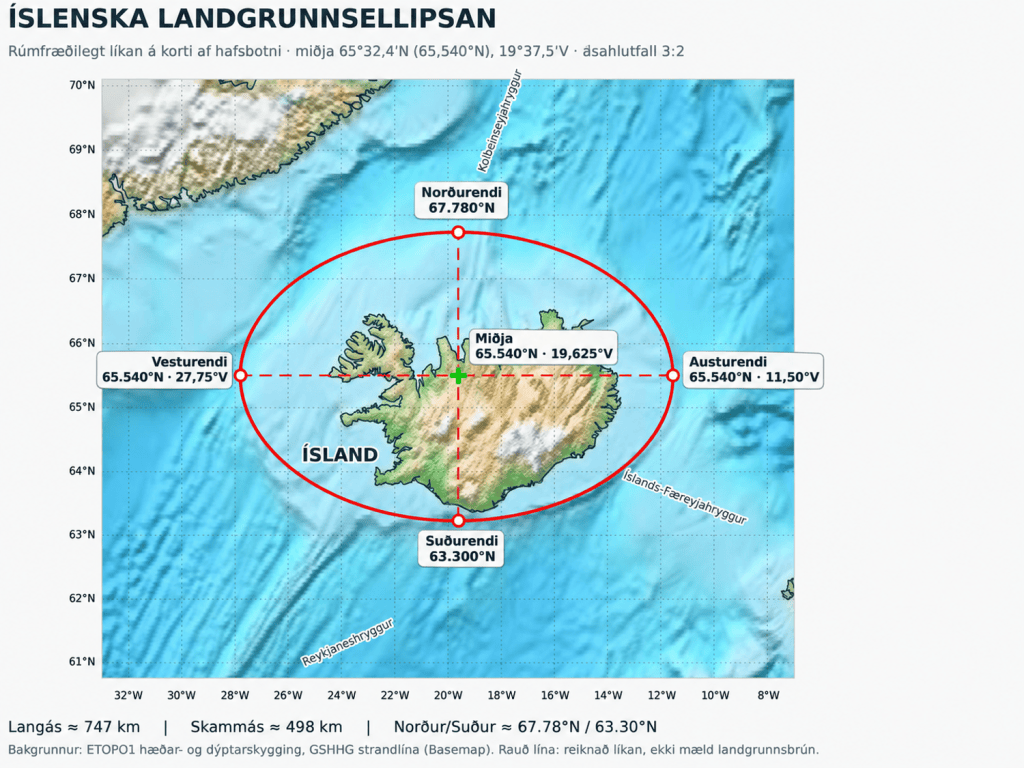
These relationships raise the possibility that the global arrangement of divergent and convergent plate boundaries reflects an underlying organisation of mantle convection. Although geometrical correspondence alone cannot establish a causal mechanism, the model provides a set of measurable relationships that can be tested against plate-boundary geometry, seismic observations, and the geological evolution of the Earth’s lithosphere.


