I am a geologist, graduated from the University of Iceland, and taught geology for a few years. I have gained some knowledge about Earth's inner structure, so I provide this website as my contribution to answer one of the greatest questions remaining within the realm of geoscience. Experiments show that the mantle should form convection rolls when close to the melting point. I took this literally, and calculated the dimensions and shape of these mantle convection rolls. Then I compare that model with the surface. This makes it possible to provide many interesting examples about geology found on my blog.
At the equator line, special physical circumstances prevail, simply becaus of the rotation. The division points between convection rolls play therefore a strong role there, acting as constraints to the tectonic drift.
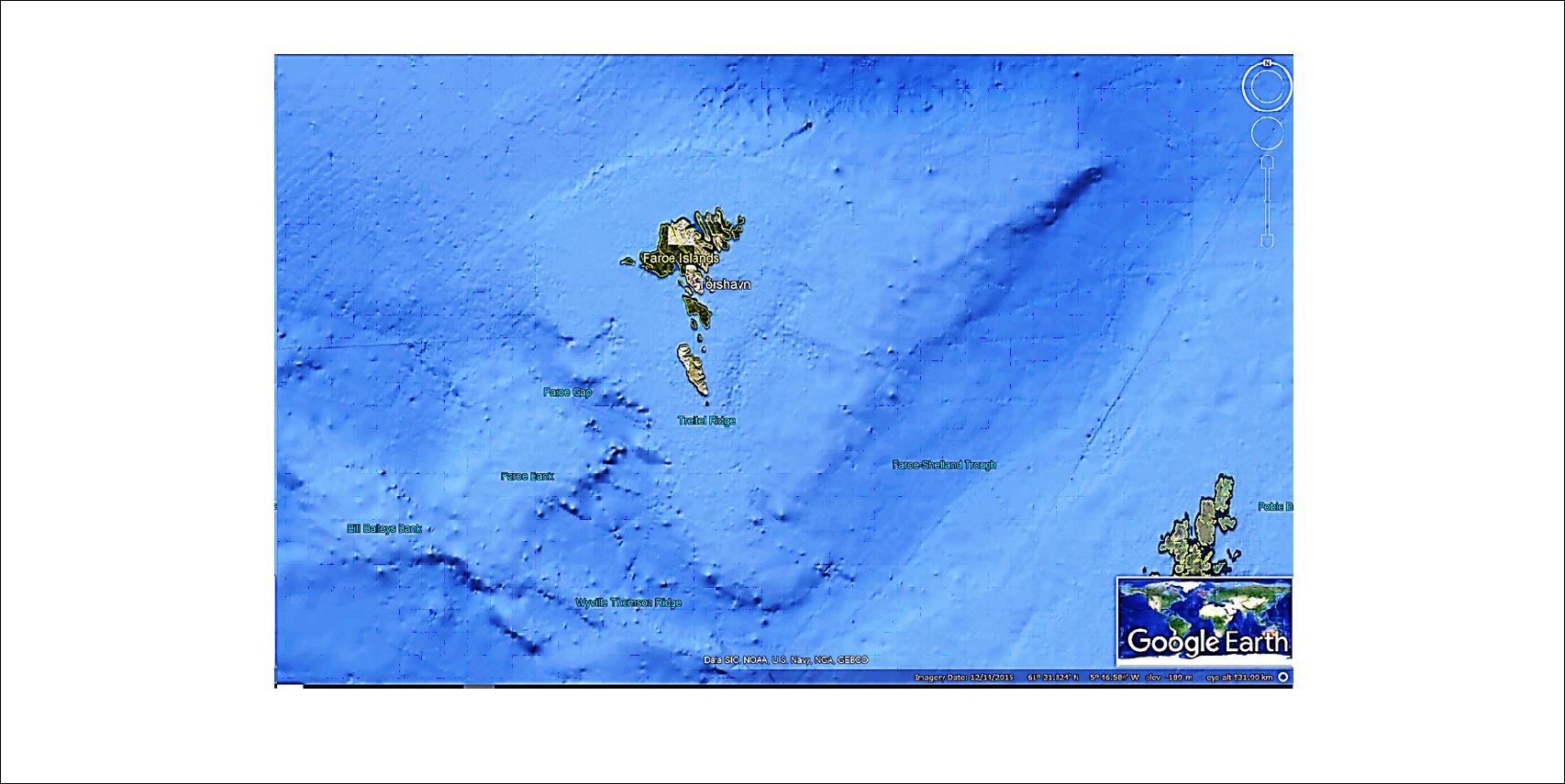
Then look at the map of the Faroe Platform. You can notice the round form north of the islands.
The Faroe Platform as seen on Google Earth
East of the islands, the Faroe-Shetland Trough seperates the two island clusters. West of the Faroe islands, the Faroe Gap plays a similar role.
This can be considered in relation to the convection rolls system. The Faroe-Shetland Trough clearly follows the convection rolls alignment. Let us combine the calculated alignment and the circular formation north of the islands, assuming a north-south symmetry of the said form.
The Faroe Islands Platform in calculated form
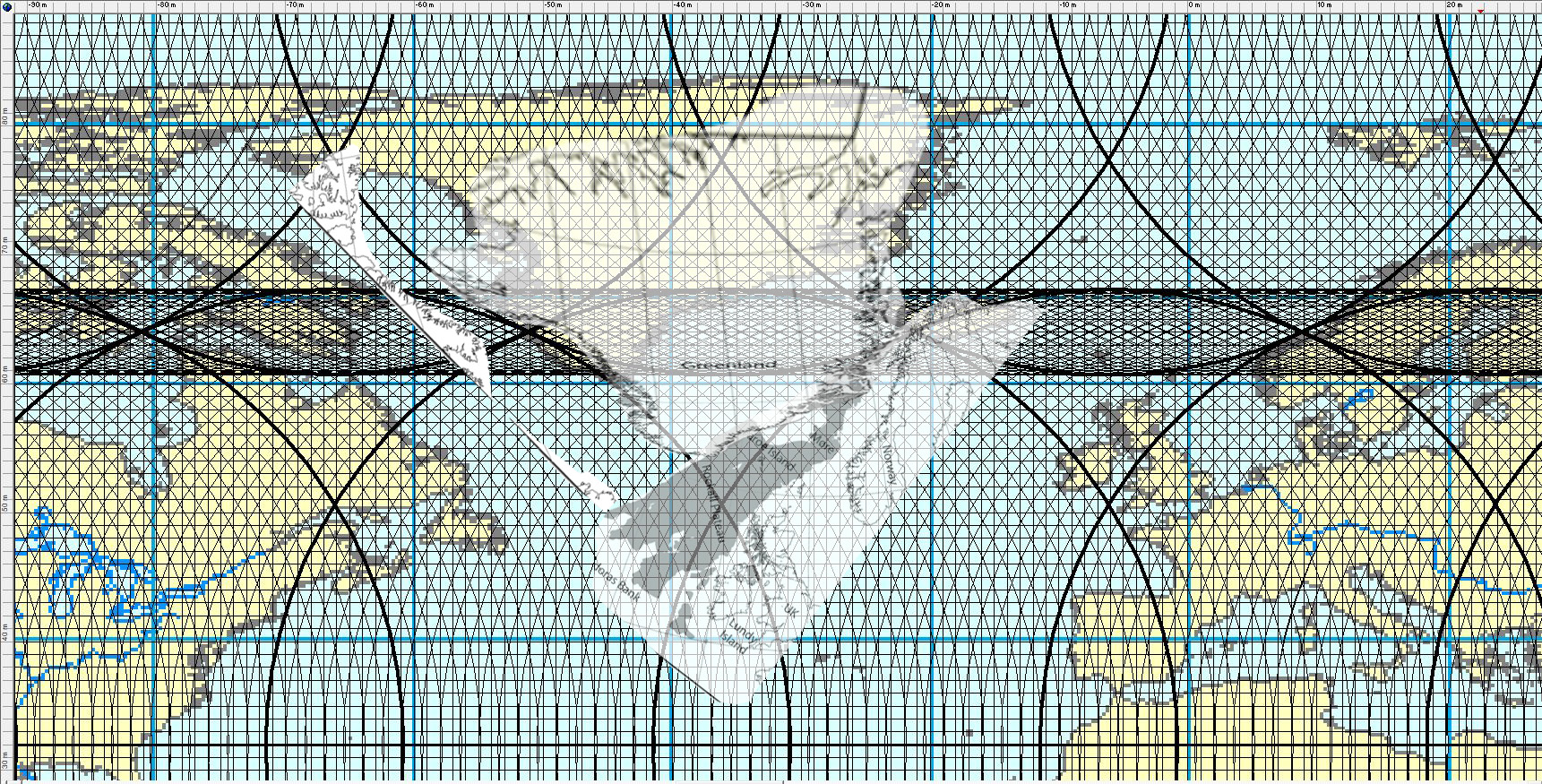
The calculated alignment of convection rolls at 62°N has the deviation 53° from west axis. The arc found north of the islands has symmetrical end points, coinciding with similar trends of the sides to the east and west (both have deviation of 53° from east-west axis). The resulting fan image is the basic form of the Faroe Islands Platform.
And if compared to the convection rolls system, you might become surprised!
The position of the Faroe Islands Platform within the convection rolls system
This shows that the more you look into each aspect, the more you know, the more you understand, the more clear the resemblance between surface topography and interior magma flow.
If we simply prolong the drift vector over 58 million years, the distance is more than 1,000 kilometers. Take the two factors into account, expansion of sea floor, and the rotation of it:
The preconditions of tectonic drift of Faroe Islands for 58 Ma
Later, when the Reykjanes Ridge took over, the line from Iceland to Greenland caused volcanism in E-Greenland. Therefore, the path over Greenland is actually caused by two different convection rolls division lines.
This could of course also be drawn with 10 pictures in a timeline 🙂
The position 58 Ma
This is a bit different from convectional drawings. The lines fit to all the igneous rock formations. The line forming the Labrador Sea extends between Ireland and Scotland, causing eruptions there. The combined effects of expansion of the North Atlantic, Charlie-Gibbs Fracture Zone and the N-E rotational trend of Europe explain the movement to present location during the next 58 Ma. Greenland on the other hand drifts back and forth during that time, first to N-E and then to N-W.
This is by no means an exact drawing, but what is pointed out here is the combination of the main system responsible for the opening of the Labrador Sea, the shift to the formation of the Reykjanes Ridge, and the igneous rock in Ireland and Scotland.
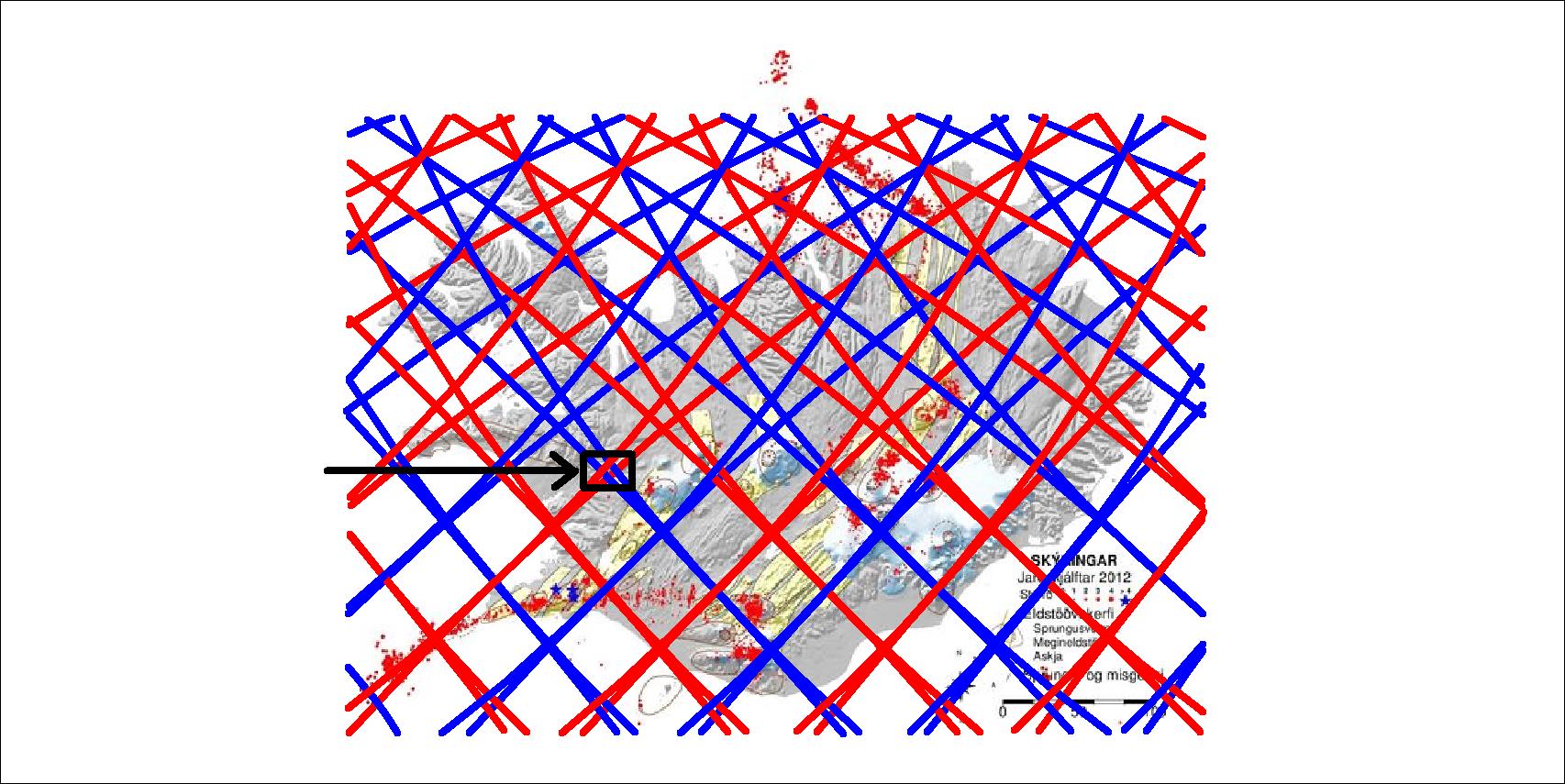
In Borgarfjörður the area around Reykholt provides naturally about 400 liters per second of boiling hot water. The Reykjanes Ridge line to NE and the NW line of Hekla intersect there and create these extraordinary conditions.
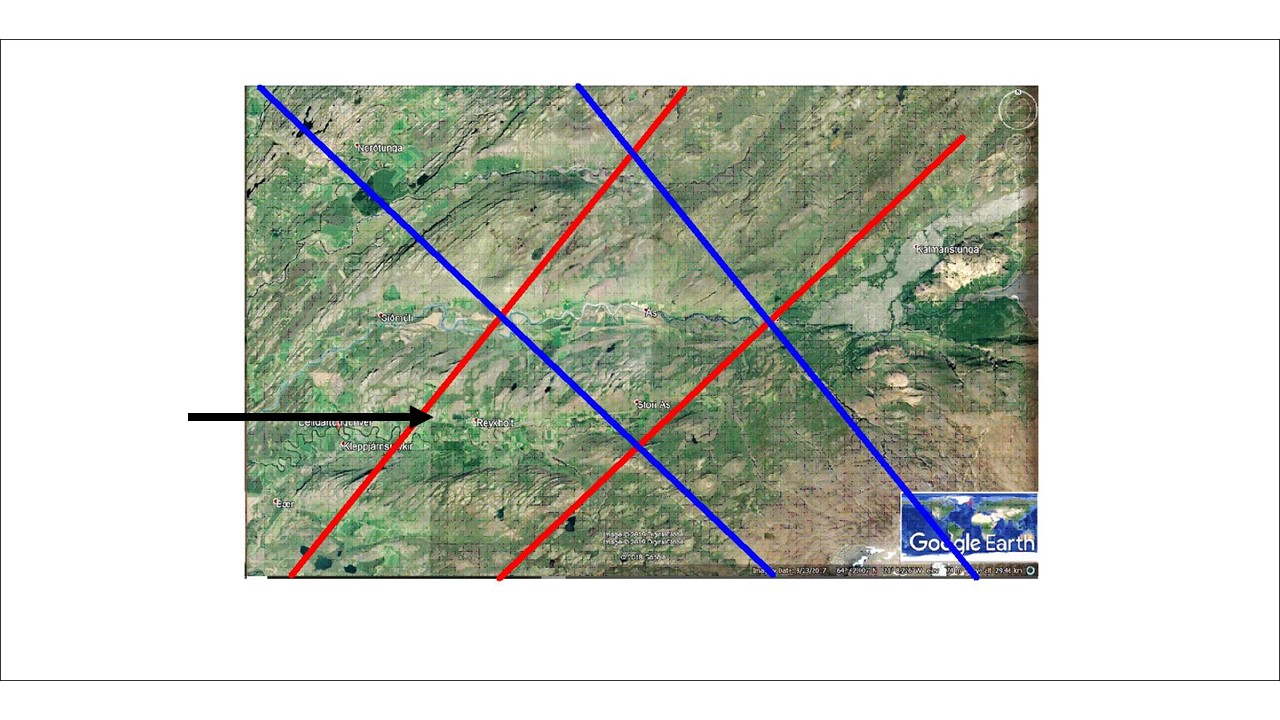
Study area of Reykholt
The valleys are oriented E-W due to the outer pressure on the polygon. A cube of mainly ductile material breaks from one corner to the other). The combination of side pressure and heat source creates a geothermal area.
Along the 64th parallel over the Southen Lowlands area the fracture zone occationally causing large earthquakes is found. An older version is found in the Borgarfjörður area. An EW-axis is also found along Eyjafjallajökull and through the Katla caldera.
EW-axis in central areas of polygons
As the lines represent divisions between convection rolls, the coherence between these EW-axis and the convection rolls is amazing. Remember that Hekla and Hallarmúli are found at the eastern end points of the relevant axis. The large flows caused by Katla euruptions are originated from an opening on the east end, through which Kötlujökull slides out from the caldera.
So should we explain this, or can anyone realize why this is so? The polygons are subject to pressure and tension from nearby polygons and the mantle flow below. As they are mainly made of ductile material, they break in the middle from one corner to the other. It is pure physics.
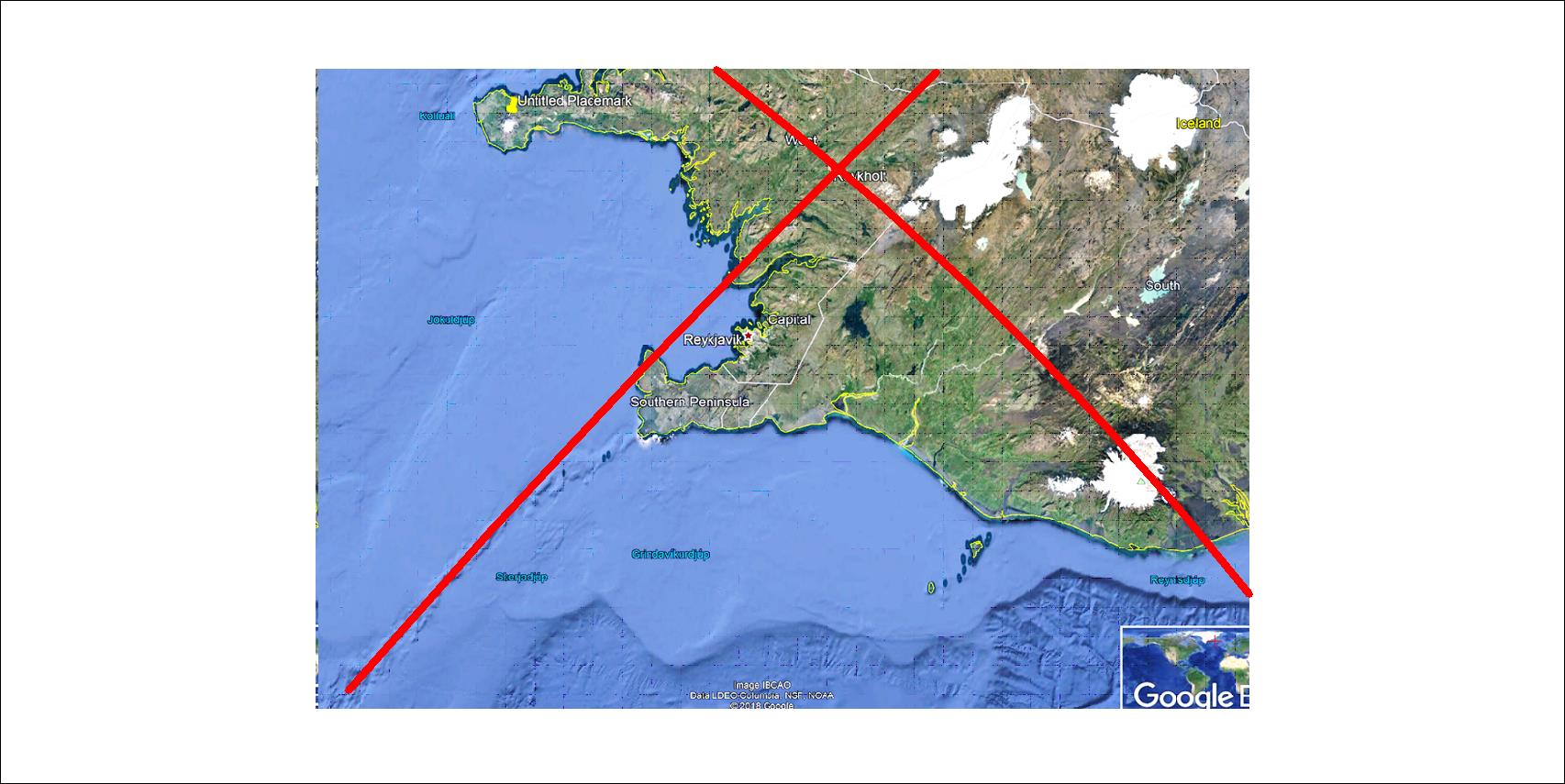
Reykholt is one of the most famous sites of Icelandic history. The location of Reykholt is at the intersection point of division lines between main convection rolls.
The convection rolls crossings at Reykholt in Iceland
One line creates the Reykjanes Ridge, a section of the Atlantic Ridge, the other line contributes directly to Katla, Hekla and Prestahnúkur. Where those lines meet, the famous geothermal area of Reykjadalur, including Reykholt and the most powerful hotspring of the world, Deildartunguhver, appear.
Snorri Sturluson lived there, wrote about history and mythology, besides
that he most likely wrote Egils saga. His farm was heated with
geothermal heat, making use of steam from nearby hotspring by letting it
through pipes under the floor within the farm.






 Magic Magma