
Two different versions of analysis of the Skagi zone:
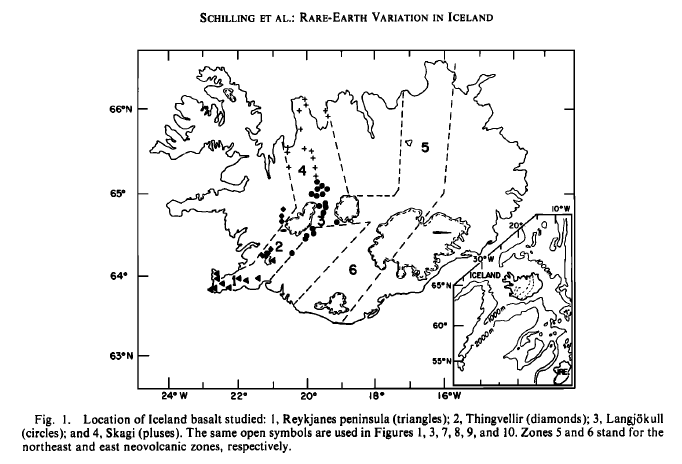
The western volcanic zone of North Iceland, the Skagi Volcanic Zone, is generally considered extinct, although present-day geothermal activity can still be associated with it. The definition and extent of this zone have varied between studies, as illustrated below. Skagi and Western Neovolcanic Zones in Iceland: 2. Geochemical Variations, written in 1978:
Comparing with grid:
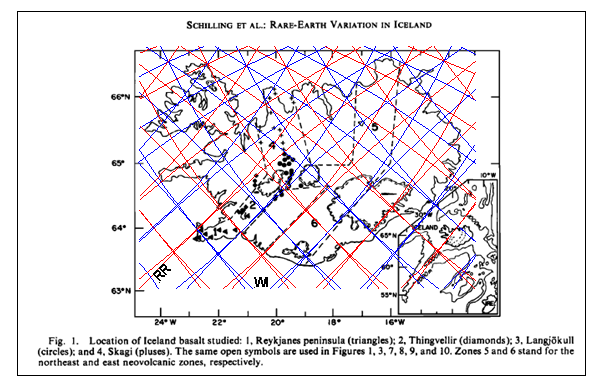
In this publication, the Skagi Volcanic Zone is marked as Zone No. 4 on the map. For comparison, I have superimposed my convection-roll grid onto the same map.
According to this interpretation, the Skagi zone has a width of 1.5° from east to west. The same width applies to the North Iceland Volcanic Zone, marked as No. 5. Notably, similarities can be observed between the convection-roll geometry and the boundaries of the volcanic zones. For example, the Reykjanes Ridge follows the western edge of the same convection roll that defines the eastern boundary of the West Volcanic Zone.
A 1.5°-wide interval also separates zones 2 and 6, and the East Volcanic Zone (No. 6) itself is likewise about 1.5° wide. Moving another 1.5° east of the East Volcanic Zone, one encounters Öræfajökull, the largest volcano in Iceland.
lthough the Skagi Volcanic Zone is not volcanically active today, the older Skagi lavas cut through a thick Tertiary lava pile approximately 0.5–2.5 million years ago. Another study presents a somewhat different delineation of the Skagi zone, showing a narrower extent, shown below. The wider interpretation may be more accurate, as rock samples were collected from the outer margins of the area.
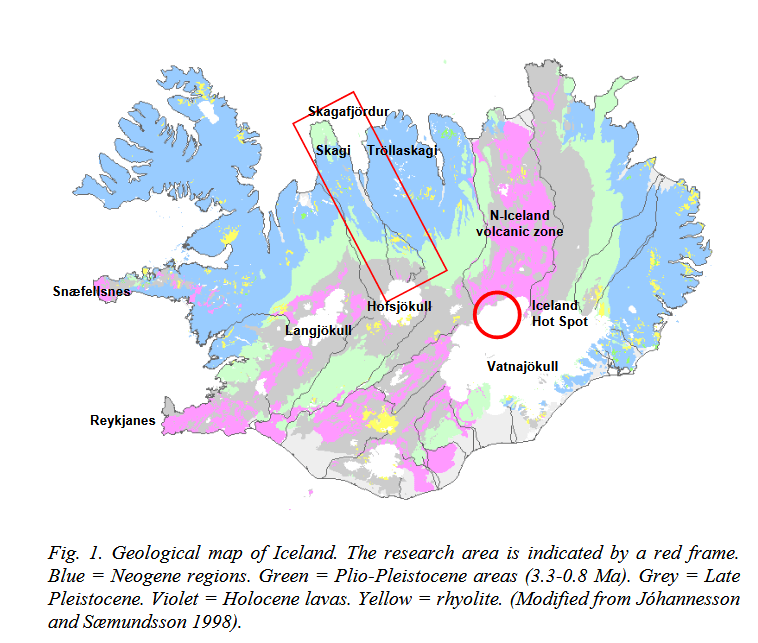

The Skagi zone is of particular interest because it aligns with a striking north–south structural axis across Iceland. This axis extends from Eyjafjallajökull, through Hekla, and northward to Skagafjörður in North Iceland. Along this line lies Drangey, a relatively young island that must be less than 700,000 years old, as indicated by its normal (contemporary) magnetic polarity.
One important reference is:
VOL. 83, NO. B8, Journal of Geophysical Research, August 10, 1978 – “Skagi and Western Neovolcanic Zones in Iceland: 2. Geochemical Variations” by J.-G. Schilling, H. Sigurdsson, and R. H. Kingsley (Graduate School of Oceanography, University of Rhode Island).
The other article:

 Magic Magma