Blog

Uncategorized

The distribution of volcanic zones and earthquake zones in Iceland

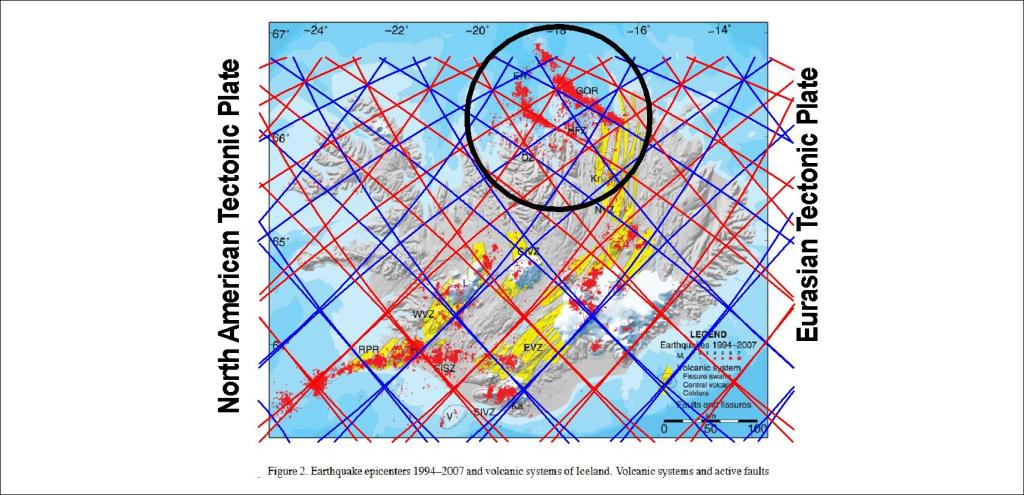
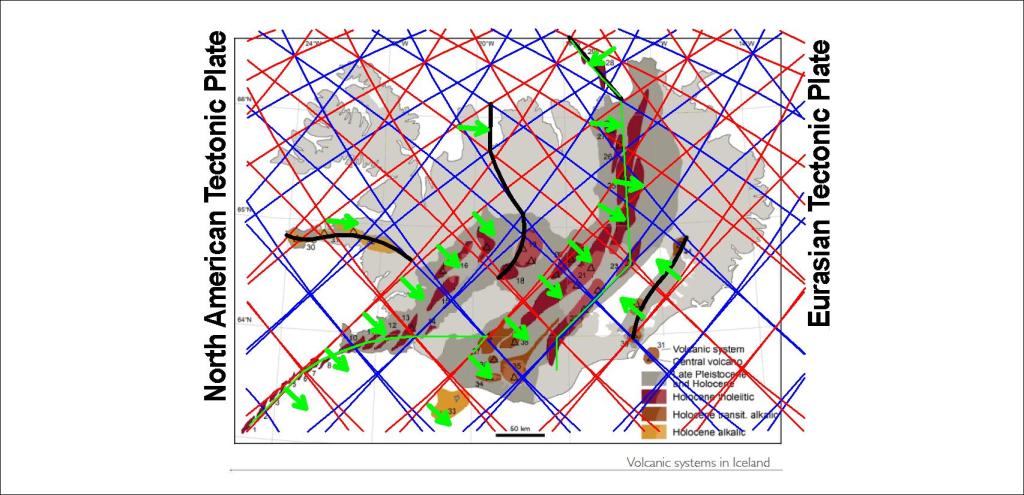
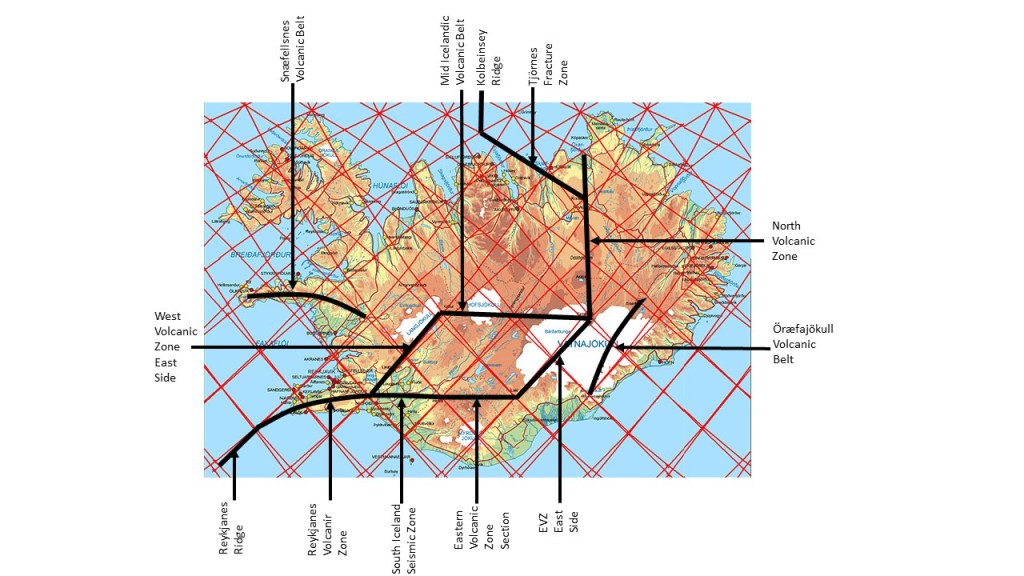
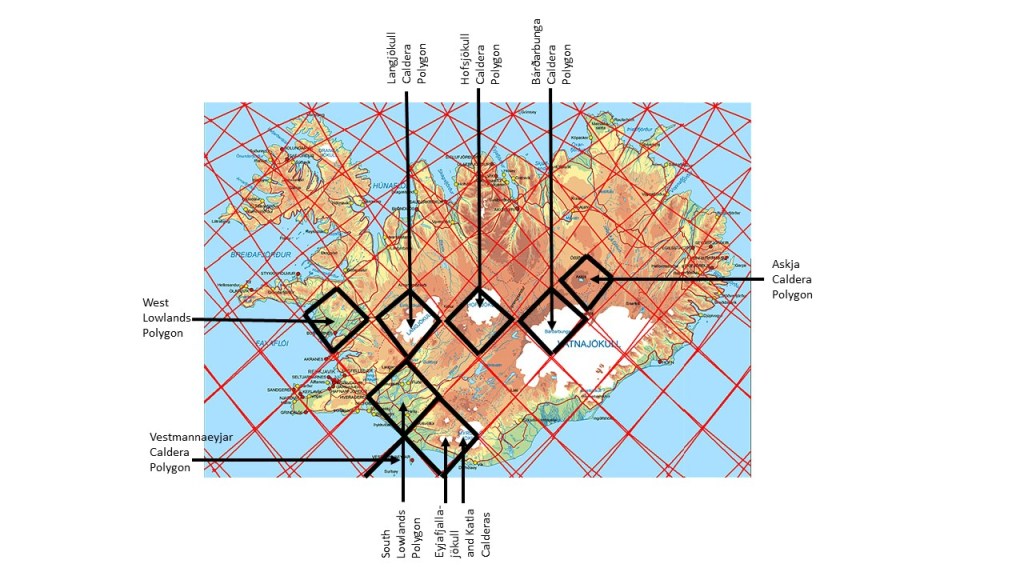
The convection rolls underneath Iceland shape the volcanic and earthquake zones. A line can be drawn between the tectonic plates, and then the interaction between teconic drift and convection rolls can be derived. Here the main zones have been marked on the map:

Here the relationship is shown between Reykjanes Ridge, Reykjanes Seismic Zone, South Iceland Seismic Zone, East Volcanic Zone, North Volcanic Zone, Borgarfjörður Seismic Zone, West Volcanic Zone, Snæfellsnes Volcanic Belt, Skagafjörður-Hofsjökull Volcanic Belt, Öræfajökull Volcanic Belt and Tjörnes Fracture Zone.

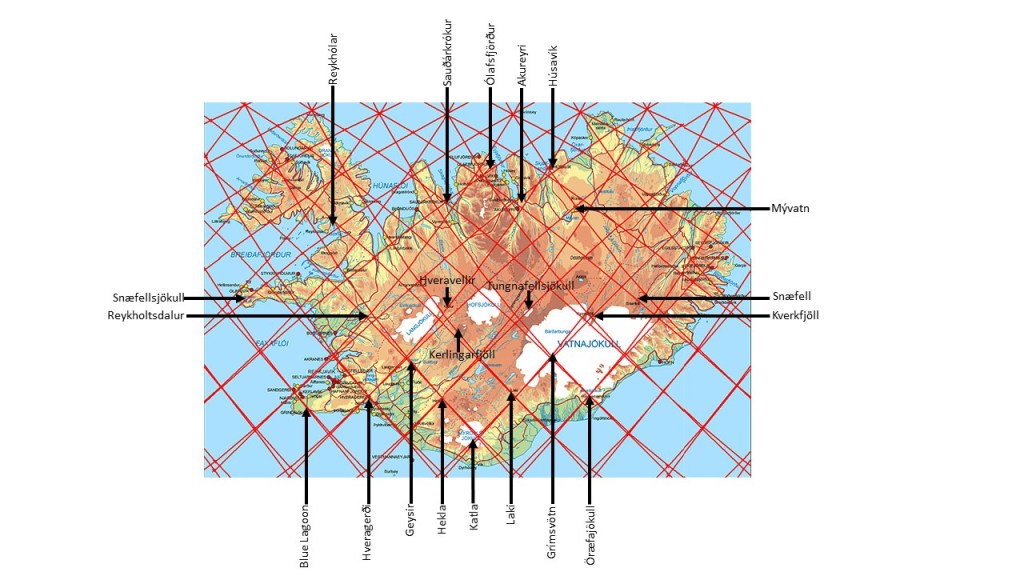
Without this grid, the reasons for the location of all those volcanic zones and earthquake zones become obscure. The similarity between the position of SISZ with Hekla and BSZ with Hallarmúli is pointed out specially. Hekla and Öræfajökull appear at the same kind of crossings, 3° apart on the same latitude. The difference between the mountains can be explained, as Hekla is at the edge of a rift zone, whereas Öræfajökull is not. Tjörnes Fracture Zone is aligned along the convection division lines. The South Iceland Seismic Zone polygon is found both south and north of the division line of the tectonic plates. The southern end drifts eastwards, while the northern end drift has a component to the west. Therefore it breaks in the middle in a way known as the bookshelf pattern.

Uncategorized

How are the Reykjanes Seismic Zone and the South Iceland Seismic Zone connected?

The seismic zones of Reykjanes and South Iceland are similar, yet the SISZ is much more prominent than the RSZ. A certain degree of continuity is suggested on this map:

Suggested continuity of Reykjanes Seismic Zone and South Iceland Seismic Zone.

This suggestion is based on the mapping of faults in the area:

Red line added to the original map.

The accurate bending of the RSZ is suggested by a central axis through 1/3 the length of the SW side of the Reykjanes Polygon, and the ends are found at the corners near Hveragerði and of the Reykjanes Ridge as shown on the map.

To further compare:

Comparing convection rolls grid and earthquakes from Nov 2019 – Feb 2020

Earthquake overview map from: https://skjalftalisa.vedur.is/?fbclid=IwAR1-djD6-Pb_3jLFDBawzLYunVOTjA9nuXbDtArQXK43EbhFzUgvIphzFAo#/page/map

Therefore the conclusion:

The Reykjanes Seismic Zone as compared with the South Iceland Seismic Zone.
Uncategorized

What is special about the location of the Reykjanes intrusion, causing uplift

Looking at the grid of division lines of convection rolls, along with the division line within the tectonic plate, we can see crossings exactly where the uplift is taking place.

Crossings between tectonic plates division and mantle rolls division lines on the Reykjanes Peninsula

The regular bow of tectonic division line from Hveragerdi to the Reykjans Ridge is mirrored around the point close to the Blue Lagoon and Grindavik.

Uncategorized

Greenland heat flow anomaly and how it connects with Iceland

Division between convection rolls from Iceland to Greenland can be compared with the map below.
Please compare this with the main line from Iceland to Greenland of the Convection Rolls Model.

In the mantle there is a layer that explains the heat anomaly found under the glacier of Greenland. It has been calculated and is shown here above.

The lines are obviously approximately the same. Usually geologists regard Vatnajökull as the site of hot spot, so therefore someone has drawn the line over Iceland a little bit eastwards of the calculated division line between convection rolls.

https://nasaviz.gsfc.nasa.gov/cgi-bin/details.cgi?aid=13128&button=recent&fbclid=IwAR0BXeq2CQ8LUoDsCPqY84TGRg8Nq8X_o6lery_z1lEPcyVBcYpM-nSRyDY

Look at this site 🙂 and how it resembles the line.

This line represents the main division of the second row of convection rolls counted from above.

The convection rolls layers within the Earth
Uncategorized

Interesting report: “Results from the ISNET2016 campaign and a new Dynamic Referenceframe for Iceland”

The National Geodetic Network of Iceland (ISNET) was measured for the third time in 2016. It shows how Iceland really drifts towards NW and NE.

Horizontal movement of Iceland between 1993 and 2016

To introduce this is quite important, as understanding tectonic drift is important to understand geology in general. The result is very clear and I recommend people to read the report carefully. Still, very few geologists seem to realize the new results, found after GPS measurements were used to find this out. Most geologists still think that the drift vectors are mainly to the east and west.

The report: https://www.lmi.is/wp-content/uploads/2019/09/skyrsla.pdf

This report is written both in Icelandic and English.

Tectonic drift compared with convecction rolls

It is obvious that some kind of harmony is found between the rolls and vectors. When outside the rift zones, the match as close as it can get.

What is really noticeable, is the fact that the vectors of the eastern part have exactly the same deviation from nort as the vectors of the western part of Iceland. This mathematical mirroring around a NS-axis is fundamental, and is in harmony with the model of the convection currents of the mantle.