Blog

Uncategorized

The two main lowland areas of Iceland

The two main lowland areas are marked on this map:

The two lowland areas of South and West

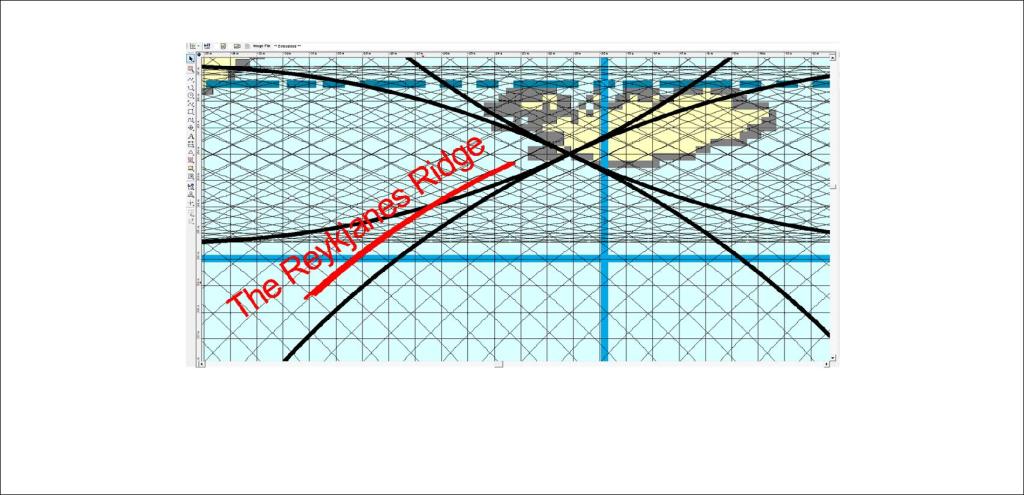
The outlines of the lowlands are obvioulsly marked by the convection rolls division lines.

The lowland areas compared with uppermost division lines

The Reykjanes Ridge uppermost division line does cross the geothermal area of the West, whereas the large geothermally active area of the South is found mainlu within a triangle, north of the South Iceland Seismic Zone (and within it), inside the polygon of the Southern Lowlands.

Uncategorized

Earthquakes near GrindavĂ­k and the convection rolls grid

The convection rolls grid over Iceland

This grid can be used for reference, explaining tectonic features of Iceland.

Having a closer look at Reykjanes Peninsula:

Reykjanes Peninsula and the SW part of Iceland
The Icelandic Met Office

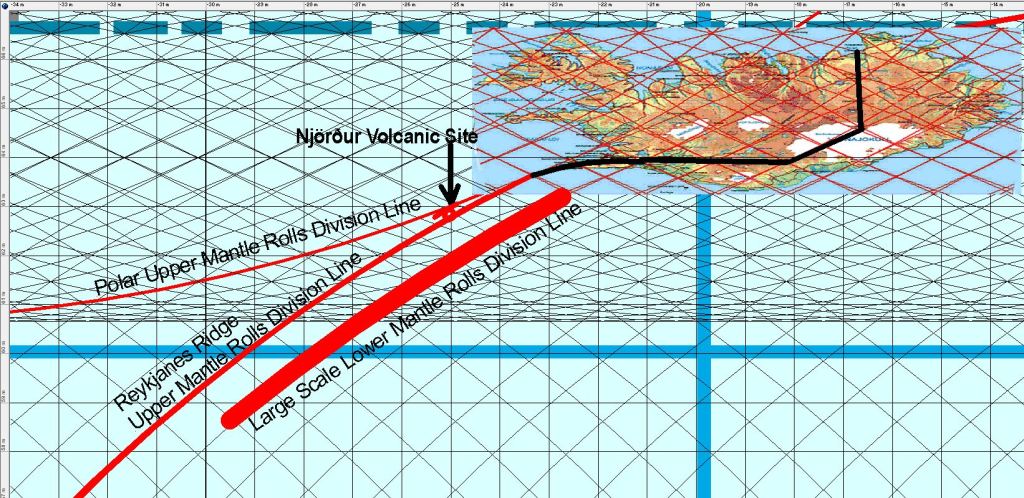
The division lines of layer 2 and 4 between 120-410 km below the surface cross the earhquake swarm from SE to NW. A volcanic system and a seismic zone are also found within the area.

Uncategorized

Correlation between mantle convection rolls and geothermal heat in Iceland

Comparing the convection rolls with the distribution of geothermal heat, a correlation is found. 1. Between division lines and high temperature areas. 2. Between tectonic plate division line and high temperature areas. 3. Between polygons and low temperature areas.

Map from Náttúrufræðistofnun Íslands showing geothermal areas

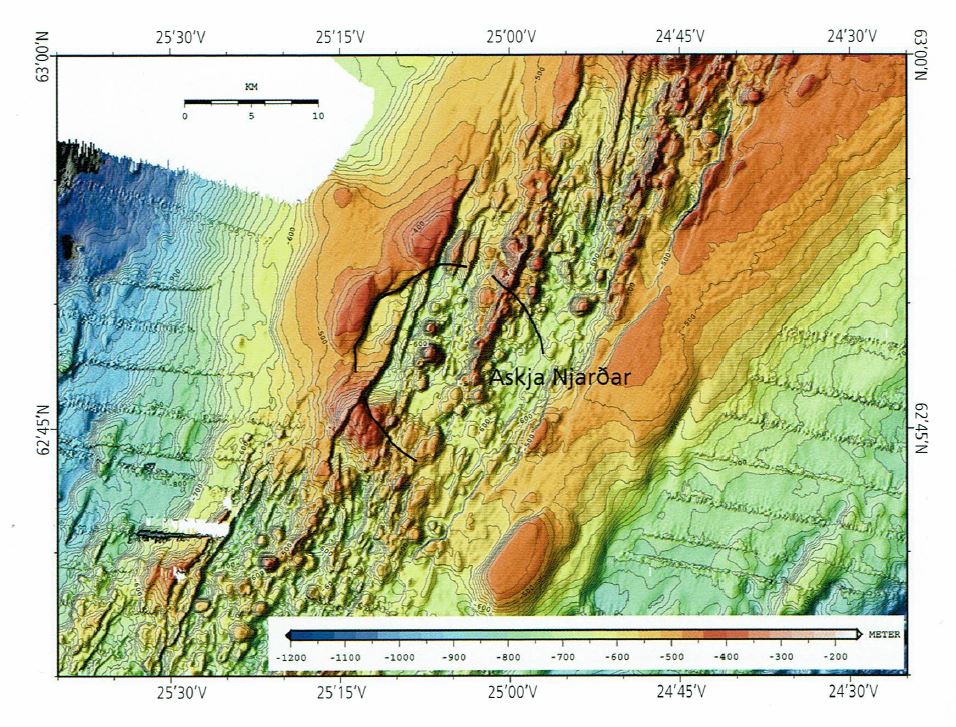
The consistency is quite obvious, but also it can be pointed out how Kverkfjöll, Askja and Fremrinámar occupy each one polygon. Geysir in Haukadalur, Hveravellir and Kerlingafjöll are found above mantle rolls division lines.

As for low temperature, the concentration within certain polygons is a special study.

The correlation is even clearer on this map from the wikipedia page about geothermal heat in Iceland:

Correlation between convection rolls and geothermal areas.

The outer border shape of low temperature areas follows the polygons. The five main areas shown here are for the Southern Lowlands, Reykholtsdalur, Skagafjördur Eyjafjördur and Skjálfandi, all show this trend.

The easiest way is to concentrate on the uppermost layer, found belwo the tectonic plate at 120 km depth. Then the division lines between the convection rolls are shown more clearly.

Only the uppermost layer of convection rolls shown, red for upwelling, blue for downwelling, along with division between tectonic plates with a black line.
Uncategorized

The symmetry of Iceland around the Reykjanes Ridge

Extending the Reykjanes Ridge, a symmetric picture of Iceland emerges. This is consistent with the presumption that the two convection rolls shaping the Reykjanes Ridge extend under Iceland in the way as drawn with red line across Iceland from SW to NE.

The symmetry around the Reykjanes Ridge extended line (red).

The Icelandic platform forms an ellipse around the extension, aligned E-W. The two volcanoes of Hekla and Eyjafjallajökull are on the NS axis of the ellipse. The two outposts of Icelandic volcanoes, Snæfellsjökull and Snæfell, are equadistant from the NS axis, and located exactly on the same latitude. If the Kolbeinsey Ridge is also extended, it is found reaching the same central point, merging with the NS axis of the ellipse and the volcanoes Hekla and Eyjafjallajökull. This high degree of consistency is in conformity with the analysis of the convection rolls below Iceland.

From: https://commons.wikimedia.org/wiki/File:Volcanic_system_of_Iceland-Map-en.svg

A map showing volcanic zones, for comparing with the drawing on Google Earth picture shown above.

Uncategorized

The geothermal resources of ReykjavĂ­k in the Mosfellsbær area

We know why geothermal heat is found in the area of Reykir near Mosfellsbær, providing Reykjavik with about half of the geothermal energy needed to heat the city. It is explained for instance in an article by Daníel Einarsson (3D modelling of the Reykir geothermal areas in Mosfellssveit, Iceland).

The map generated by DanĂ­el Einarsson, showing the geothermal areas in Mosfellssveit

This shows clearly the NW-SE alignment of the area, even though it is associated with a fissure swarm oriented NE-SW. Therefore a comparison with the mantle convection rolls alignment is needed to see the reason for this topography and arrangement of geothermal resources within the area.

The NW-SE oriented convectin rolls division lines near Mosfellsbær

The alignment is found to be the same as of the calculated NW-SE lines. Therefore it can be reasoned that the geothermal activity is associated with three factors. First an old high temperature area that has cooled down, second the fissure swarm from Krýsuvík and Trölladyngja, and thirdly from the effect of the edge of the relevant polygon, whereas two division lines of convection rolls are found underneath the geothermal fields.

https://skemman.is/bitstream/1946/31403/1/MSC-Dan%C3%ADelEinarsson_Spring2018_3D%20modelling%20of%20the%20Reykir%20geothermal%20areas%20in%20Mosfellssveit%2C%20Iceland.pdf

Here is the article by DanĂ­el Einarsson.