
A tectonic plate is brittle at the top, but most of it is ductile. The fractures of ductile and brittle materials are different, and therefore magma can find different flowlines within different depth levels of the plate. This is explained in the article: https://www.sciencedirect.com/science/article/abs/pii/S009364131730561X as shown below:
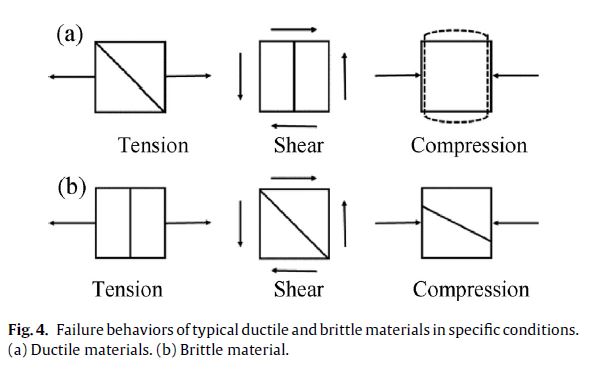
The polygons that characterize the southern half of Iceland are remarkably regular, allowing simple geometric patterns to emerge clearly. In both brittle and ductile layers, deformation occurs systematically: brittle layers are affected primarily by tension, while ductile layers accommodate shear. As a result, faulting tends to propagate from one corner of each polygon to the opposite corner. Within the volcanic zones, tension fractures are particularly evident, as illustrated in Figure (b).
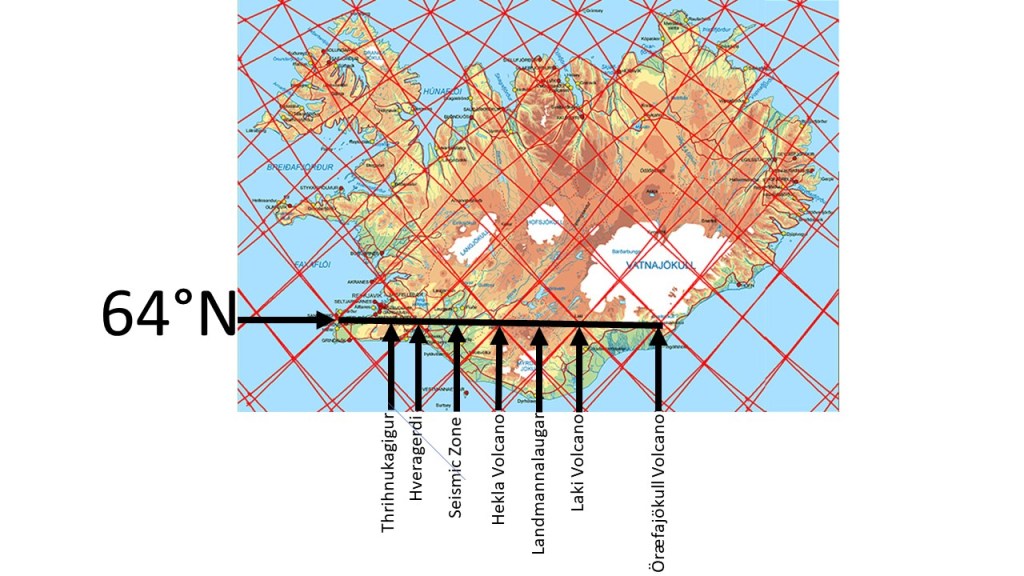
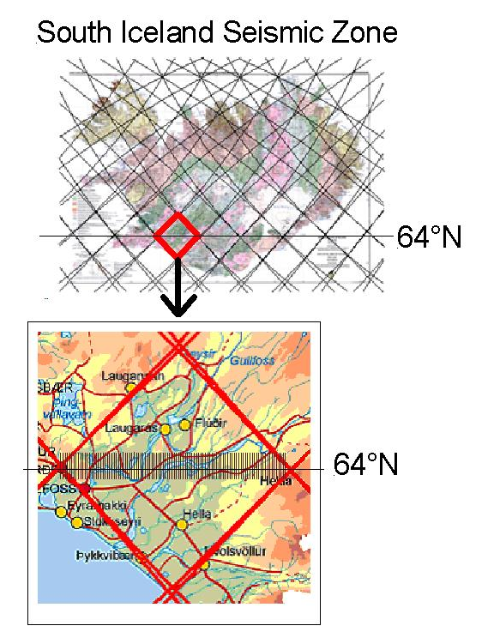
These polygons have divisions from east to west between the corners. It has been measured very accurately geophysically for the South Iceland Seismic Zone as seen here: https://www.sciencedirect.com/science/article/abs/pii/S0264370799000460
The southern region of Iceland exhibits a high degree of polygonal regularity, enabling clear geometric relationships to be identified. Both brittle and ductile layers are systematically deformed: brittle deformation is dominated by tension, while ductile deformation accommodates shear. In both cases, faulting and strain localization occur preferentially along diagonals connecting opposing polygon corners.
This structural organization is particularly evident along the 64th parallel, where the polygons approach a near-ideal diamond geometry. Within these polygons, east–west-oriented lineaments subdivide the structure along corner-to-corner axes. These features are independently supported by geophysical observations within the South Iceland Seismic Zone, where detailed measurements confirm the presence of such structural divisions.
Furthermore, the regional stress field associated with this polygonal framework predicts the development of volcanic fissures oriented NE–SW. This prediction is consistent with observed fissure swarms in Icelandic volcanic zones, indicating that their orientation is controlled by the underlying geometric and mechanical structure.
A notable deviation occurs on the Reykjanes Peninsula, where the central polygonal axis bends southward in its western segment. This deflection corresponds to its interaction with the Reykjanes Ridge and the adjacent polygonal system to the southwest, reflecting boundary-induced modification of the otherwise regular structure.
In contrast, other regions of Iceland display a more uniform configuration, with well-defined east–west axes extending directly between polygon corners, consistent with the predictions of the model.

 Magic Magma